
Pulp Fiction, 1924 · page 76 of 200
Adventure Magazine Cover — page 76: what you’re looking at
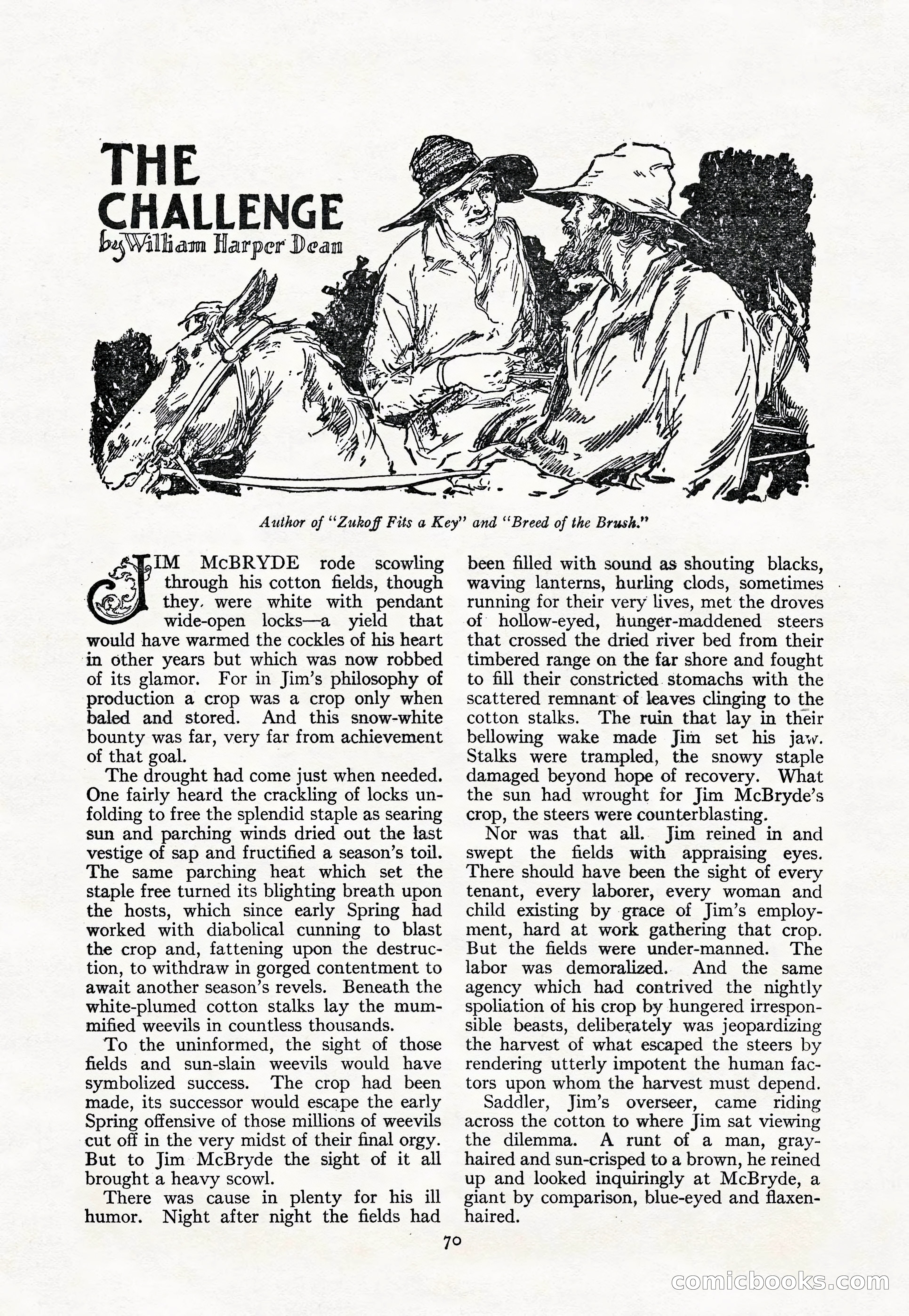
A restored page from Pulp Fiction, 1924. Page through the whole issue in the reader above.
📄 Transcribed text from this page (OCR, searchable)
Machine-transcribed from the original scan — historical spelling and the odd misread are preserved.
THE CHALLENGE bu William a Dean | Author of ‘“Zukoff Fits a Key’ and “Breed of the Brush.” IM McBRYDE rode _ scowling through his cotton fields, though they. were white with pendant wide-open locks—a yield that would have warmed the cockles of his heart in Other years but which was now robbed of its glamor. For in Jim’s philosophy of production a crop was a crop only when baled and stored. And this snow-white bounty was far, very far from achievement of that goal. The drought had come just when needed. One fairly heard the crackling of locks un- folding to free the splendid staple as searing sun and parching winds dried out the last vestige of sap and fructified a season’s toil. The same parching heat which set the staple free turned its blighting breath upon the hosts, which since early Spring had worked with diabolical cunning to blast the crop and, fattening upon the destruc- tion, to withdraw in gorged contentment to await another season’s revels. Beneath the white-plumed cotton stalks lay the mum- mified weevils in countless thousands. To the uninformed, the sight of those fields and sun-slain weevils would have symbolized success. The crop had been made, its successor would escape the early Spring offensive of those millions of weevils cut off in the very midst of their final orgy. But to Jim McBryde the sight of it all brought a heavy scowl. There was cause in plenty for his ill humor. Night after night the fields had ye) been filled with sound as shouting blacks, waving lanterns, hurling clods, sometimes running for their very lives, met the droves of hollow-eyed, hungér-maddened steers that crossed the dried river bed from their timbered range on the far shore and fought to fill their constricted. stomachs with the scattered remnant of leaves clinging to the cotton stalks. The ruin that lay in their bellowing wake made Jim set his jaw. Stalks were trampled, the snowy staple damaged beyond hope of recovery. What the sun had wrought for Jim McBryde’s crop, the steers were counterblasting. Nor was that ali. Jim reined in and swept the fields with appraising eyes. There should have been the sight of every tenant, every laborer, every woman and child existing by grace of Jim’s employ- ment, hard at work gathering that crop. But the fields were under-manned. The labor was demoralized. And the same agency which had contrived the nightly spoliation of his crop by hungered irrespon- sible beasts, deliberately was jeopardizing the harvest of what escaped the steers by rendering utterly impotent the human fac- tors upon whom the harvest must depend. Saddler, Jim’s overseer, came riding across the cotton to where Jim sat viewing the dilemma. A runt of a man, gray- haired and sun-crisped to a brown, he reined up and looked inquiringly at McBryde, a giant by comparison, blue-eyed and flaxen- haired. Go [DOO © S|