
Pulp Fiction, 1925 · page 150 of 196
Adventure Magazine Cover — page 150: what you’re looking at
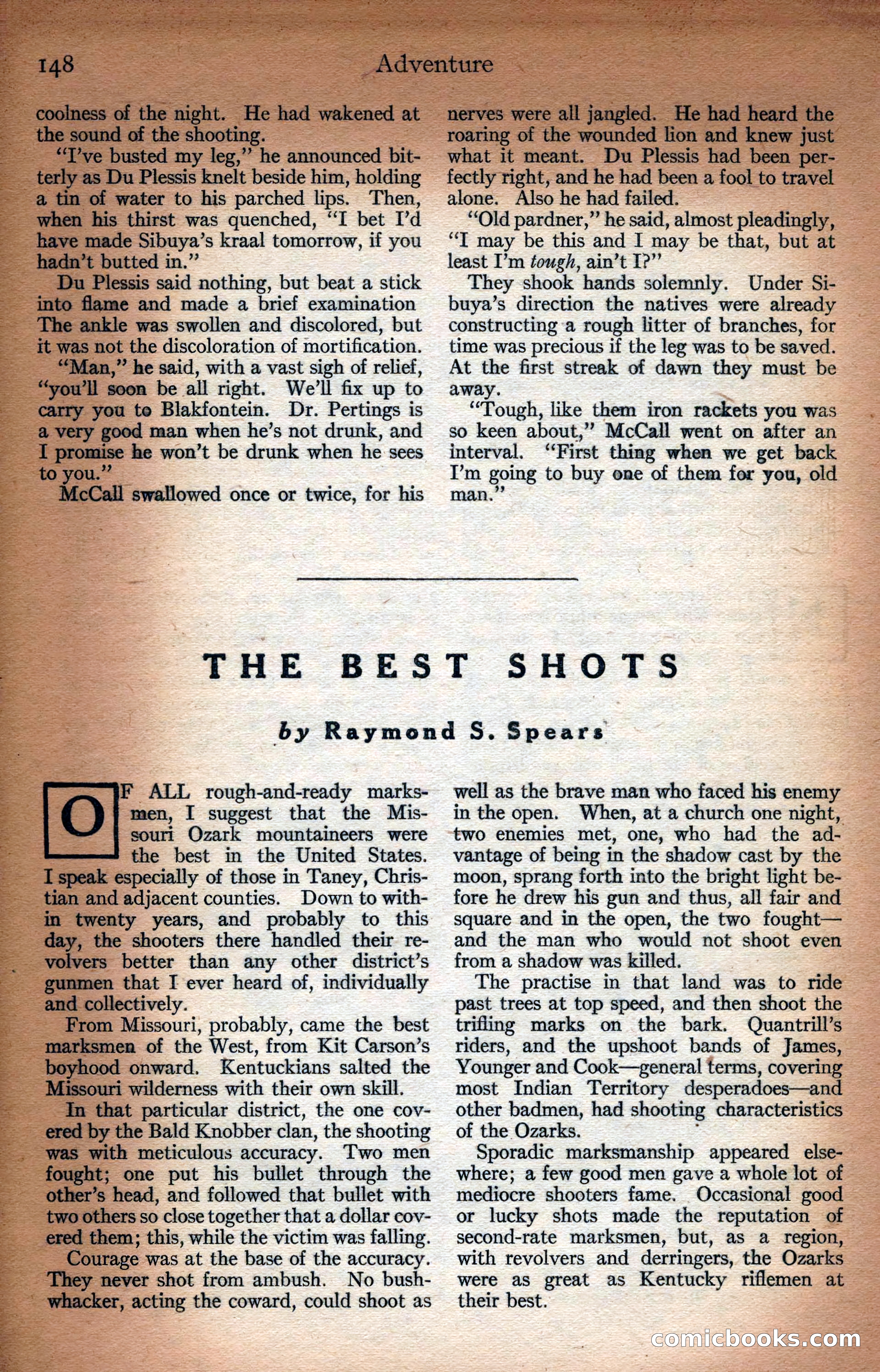
A restored page from Pulp Fiction, 1925. Page through the whole issue in the reader above.
📄 Transcribed text from this page (OCR, searchable)
Machine-transcribed from the original scan — historical spelling and the odd misread are preserved.
148 coolness of the night. He had wakened at the sound of the shooting. “T’ve busted my leg,” he announced bit- terly as Du Plessis knelt beside him, holding a tin of water to his parched lips. Then, when his thirst was quenched, “I bet I’d have made Sibuya’s kraal tomorrow, if you hadn’t butted in.”’ Du Plessis said nothing, but beat a stick into flame and made a brief examination The ankle was swollen and discolored, but it was not the discoloration of mortification. “Man,” he said, with a vast sigh of relief, “you ll soon be all right. We'll fix up to carry you to Blakfontein. Dr. Pertings is a very good man when he’s not drunk, and I promise he won’t be drunk when he sees to you.” McCall swallowed once or twice, for his Adventure nerves were all jangled. He had heard the roaring of the wounded lion and knew just what it meant. Du Plessis had been per- fectly right, and he had been a fool to travel alone. Also he had failed. “Old pardner,”’ he said, almost pleadingly, “Tf may be this and I may be that, but at least I’m tough, ain’t I?”’ They shook hands solemnly. Under Si- buya’s direction the natives were already constructing a rough litter of branches, for time was precious if the leg was to be saved. At the first streak of dawn they must be away. “Tough, like them iron rackets you was so keen about,”’ McCall went on after an interval. ‘First thing when we get back I’m going to buy one of them for you, old man.” THE BEST SHOTS by Raymond S. Spears F ALL rough-and-ready marks- men, I suggest that the Mis- sourt Ozark mountaineers were the best in the United States. I speak especially of those in Taney, Chris- tian and adjacent counties. Down to with- in twenty years, and probably to this day, the shooters there handled their re- volvers better than any other district’s gunmen that I ever heard of, individually and collectively. From Missouri, probably, came the best marksmen of the West, from Kit Carson’s boyhood onward. Kentuckians salted the Missouri wilderness with their own skill. In that particular district, the one cov- ered by the Bald Knobber clan, the shooting was with meticulous accuracy. Two men fought; one put his bullet through the other’s head, and followed that bullet with two others so close together that a dollar cov- ered them; this, while the victim was falling. Courage was at the base of the accuracy. They never shot from ambush. No bush- whacker, acting the coward, could shoot as well as the brave man who faced his enemy in the open. When, at a church one night, two enemies met, one, who had the ad- vantage of being in the shadow cast by the moon, sprang forth into the bright light be- fore he drew his gun and thus, all fair and square and in the open, the two fought— and the man who would not shoot even from a shadow was killed. The practise in that land was to ride past trees at top speed, and then shoot the trifling marks on the bark. Quantrill’s riders, and the upshoot bands of James, Younger and Cook—general terms, covering most Indian Territory desperadoes—and other badmen, had shooting characteristics of the Ozarks. Sporadic marksmanship appeared else- where; a few good men gave a whole lot of mediocre shooters fame. Occasional good or lucky shots made the reputation of second-rate marksmen, but, as a region, with revolvers and derringers, the Ozarks were as great as Kentucky riflemen at their best. Eomicbooks.com cn)