
Pulp Fiction, 1924 · page 165 of 172
Argosy All-Story Weekly, April 19, 1924 — page 165: what you’re looking at
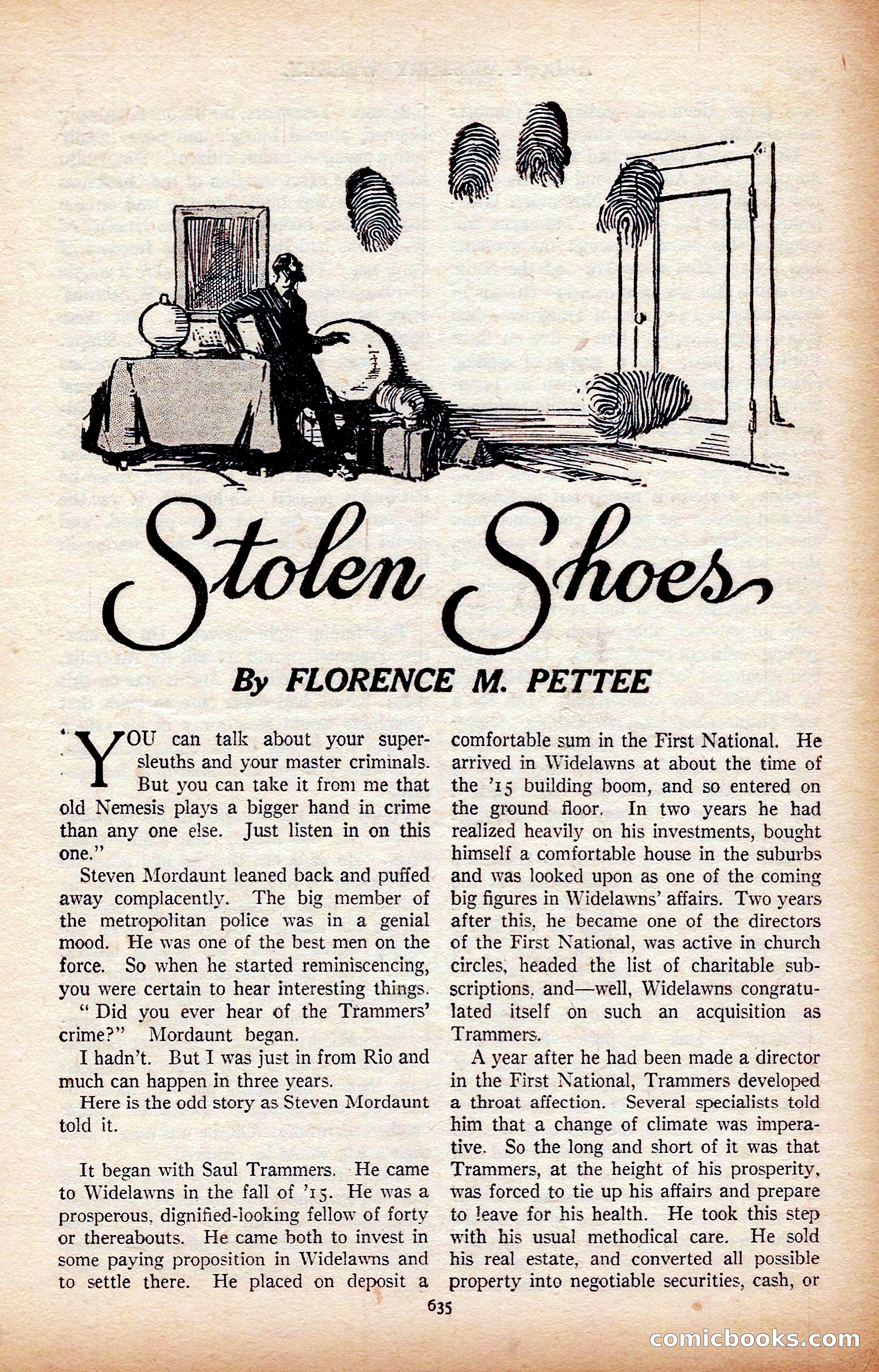
A restored page from Pulp Fiction, 1924. Page through the whole issue in the reader above.
📄 Transcribed text from this page (OCR, searchable)
Machine-transcribed from the original scan — historical spelling and the odd misread are preserved.
By FLORENCE M. PETTEE ms OU can talk about your super- y sleuths and your master criminals. But you can take it from me that old Nemesis plays a bigger hand in crime than any one else. Just listen in on this one.”’ Steven Mordaunt leaned back and puffed away complacently. The big member of the metropolitan police was in a genial mood. He was one of the best men on the force. So when he started reminiscencing, you were certain to hear interesting things. “Did you ever hear of the Trammers’ crime?” Mordaunt began. Thadn’t. But I was just in from Rio and much can happen in three years. Here is the odd story as Steven Mordaunt told it. It began with Saul Trammers. He came to Widelawns in the fall of 715. He wasa prosperous, dignified-iooking fellow of forty or thereabouts. He came both to invest in some paying proposition in Widelawns and to settle there. He placed on deposit a 635 comfortable sum in the First National. He arrived in Widelawns at about the time of the 715 building boom, and so entered cn the ground floor. In two years he had realized heavily on his investments, bought himself a comfortable house in the suburbs and was looked upon as one of the coming big figures in Widelawns’ affairs. Two years after this, he became one of the directors of the First National, was active in church circles, headed the list of charitable sub- scriptions, and—well, Widelawns congratu- lated itself on such an acquisition as Trammers. A year after he had been made a director in the First National, Trammers developed a throat affection. Several specialists told him that a change of climate was impera- tive. So the long and short of it was that Trammers, at the height of his prosperity, was forced to tie up his affairs and prepare to leave for his health. He took this step with his usual methodical care. He sold his real estate, and converted all possible property into negotiable securities, cash, or GEomicb J il a ee = e fae - "haw PP nt rn ee ers i a Se a ae | ings ee IE ge oo =) e 2m -