
Pulp Fiction, 1928 · page 143 of 160
Argosy All-Story Weekly, April 7, 1928 — page 143: what you’re looking at
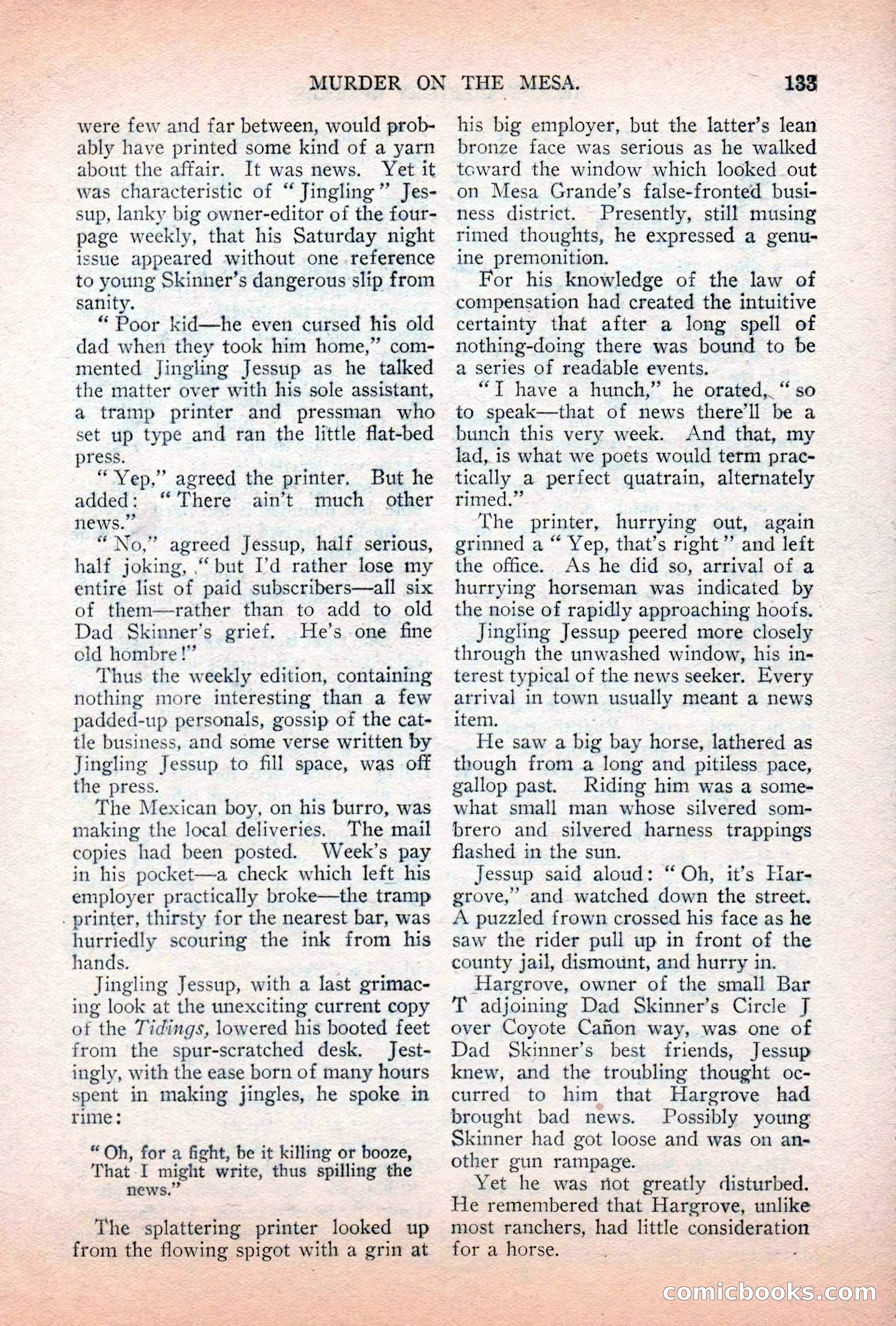
A restored page from Pulp Fiction, 1928. Page through the whole issue in the reader above.
📄 Transcribed text from this page (OCR, searchable)
Machine-transcribed from the original scan — historical spelling and the odd misread are preserved.
MURDER ON THE MESA. were few and far between, would prob- ably have printed some kind of a yarn about the affair. It was news. Yet it was characteristic of “ Jingling”’ Jes- sup, lanky big owner-editor of the four- page weekly, that his Saturday night issue appeared without one reference to young Skinner’s dangerous slip from sanity. “ Poor kid—he even cursed his old dad when they took him home,” com- mented Jingling Jessup as he talked the matter over with his sole assistant, a tramp printer and pressman who set up type and ran the little flat-bed press. “Yep,” agreed the printer. But he added: “ There ain’t much other news.” “No,” agreed Jessup, half serious, half joking, “ but I’d rather lose my entire list of paid subscribers—all six of them—rather than to add to old Dad Skinner’s grief. He’s one fine old hombre!” Thus the weekly edition, containing nothing more interesting than a few padded-up personals, gossip of the cat- tle business, and some verse written by Jingling Jessup to fill space, was off the press. The Mexican boy, on his burro, was making the local deliveries. The mail copies had been posted. Week’s pay in his pocket—a check which left his employer practically broke—the tramp . printer, thirsty for the nearest bar, was hurriedly scouring the ink from his hands. Jingling Jessup, with a last grimac- ing look at the unexciting current copy of the Tidings, lowered his booted feet from the spur-scratched desk. Jest- ingly, with the ease born of many hours spent in making jingles, he spoke in rime: “Oh, for a fight, be it killing or booze, That I might write, thus spilling the news.” The splattering printer looked up from the flowing spigot with a grin at 133 his big employer, but the latter’s lean bronze face was serious as he walked toward the window which looked out on Mesa Grande’s false-fronted busi- ness district. Presently, still musing rimed thoughts, he expressed a genu- ine premonition. For his knowledge of the law of compensation had created the intuitive certainty that after a long spell of nothing-doing there was bound to be a series of readable events. “T have a hunch,” he orated,. “ so to speak—that of news there'll be a bunch this very week. And that, my lad, is what we poets would term prac- tically a perfect quatrain, alternately rimed.”’ The printer, hurrying out, again grinned a “ Yep, that’s right”’ and left the office. As he did so, arrival of a hurrying horseman was indicated by the noise of rapidly approaching hoofs. Jingling Jessup peered more closely through the unwashed window, his in- terest typical of the news seeker. Every arrival in town usually meant a news item. : He saw a big bay horse, lathered as though from a long and pitiless pace, gallop past. Riding him was a some- what small man whose silvered som- brero and silvered harness trappings flashed in the sun. Jessup said aloud: “ Oh, it’s Har- grove,” and watched down the street. A puzzled frown crossed his face as he saw the rider pull up in front of the county jail, dismount, and hurry in. Hargrove, owner of the small Bar T adjoining Dad Skinner’s Circle J over Coyote Cafon way, was one of Dad Skinner’s best friends, Jessup knew, and the troubling thought oc- curred to him that Hargrove had brought bad news. Possibly young Skinner had got loose and was on an- other gun rampage. Yet he was riot greatly disturbed. He remembered that Hargrove, unlike most ranchers, had little consideration for a horse. Eomichbooks (E@)