
Pulp Fiction, 1928 · page 7 of 150
Argosy All-Story Weekly, July 7, 1928 — page 7: what you’re looking at
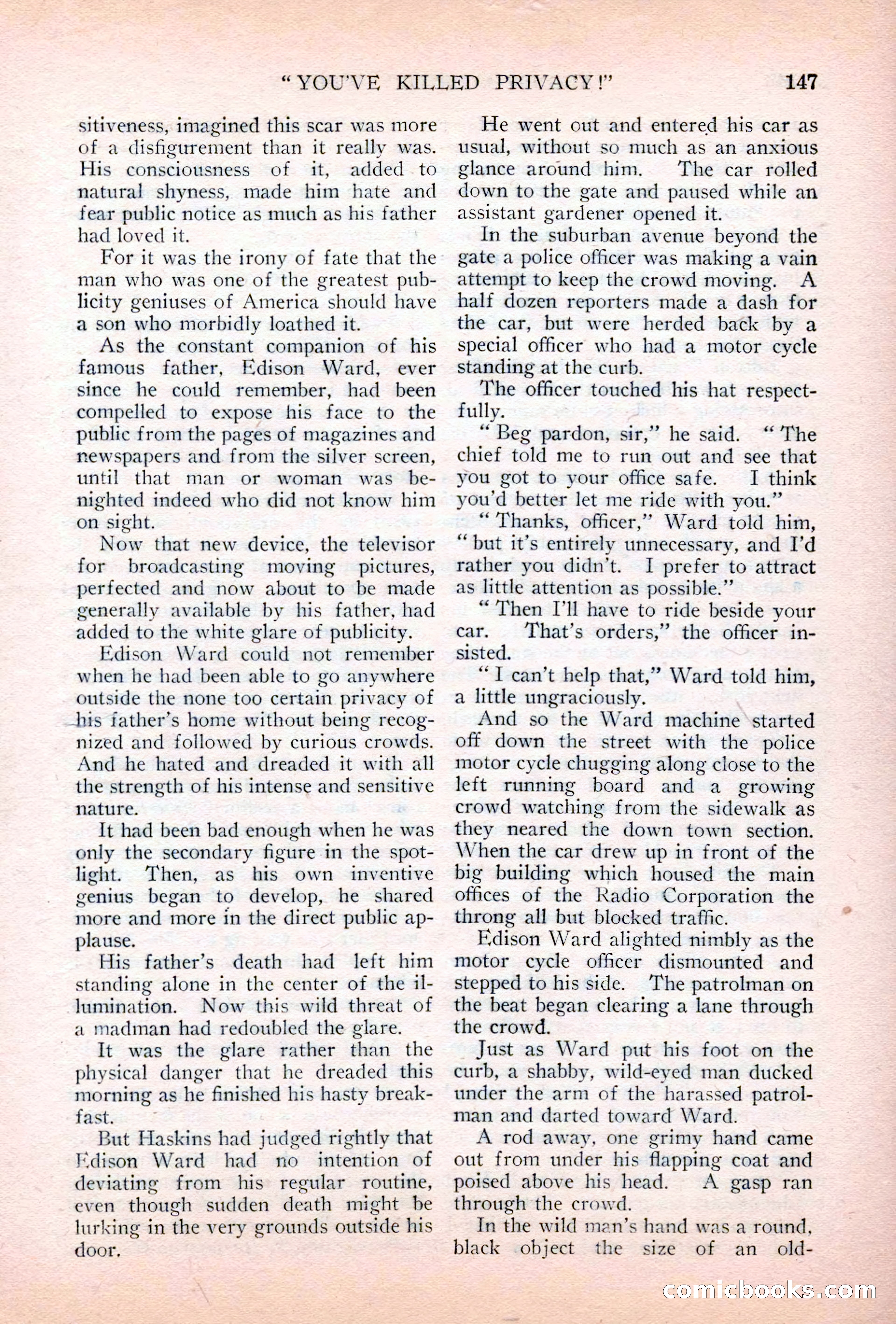
A restored page from Pulp Fiction, 1928. Page through the whole issue in the reader above.
📄 Transcribed text from this page (OCR, searchable)
Machine-transcribed from the original scan — historical spelling and the odd misread are preserved.
“YOUVE KILLED PRIVACY !” sitiveness, imagined this scar was more of a disfigurement than it really was. His consciousness of it, added -to natural shyness, made him hate and fear public notice as much as his father had loved it. For it was the irony of fate that the man who was one of the greatest pub- licity geniuses of America should have a son who morbidly loathed it. As the constant companion of his famous father, Edison Ward, ever since he could remember, had been compelled to expose his face to the public from the pages of magazines and newspapers and from the silver screen, until that man or woman was _ be- nighted indeed who did not know him on sight. Now that new device, the televisor for broadcasting moving pictures, perfected and now about to be made generally available by his father, had added to the white glare of publicity. Edison Ward could not remember when he had been able to go anywhere outside the none too certain privacy of his father’s home without being recog- nized and followed by curious crowds. And he hated and dreaded it with all the strength of his intense and sensitive nature. It had been bad enough when he was only the secondary figure in the spot- light. Then, as his own inventive genius began to develop, he shared more and more in the direct public ap- plause. His father’s death had left him standing alone in the center of the il- lumination. Now this wild threat of a madman had redoubled the glare. Jt was the glare rather than the physical danger that he dreaded this morning as he finished his hasty break- fast. But Haskins had judged rightly that Edison Ward had no_ intention of deviating from his regular routine, even though sudden death might be lurking in the very grounds outside his door, 147 He went out and entered his car as usual, without so much as an anxious glance around him. ‘The car rolled down to the gate and paused while an assistant gardener opened it. In the suburban avenue beyond the gate a police officer was making a vain attempt to keep the crowd moving. A half dozen reporters made a dash for the car, but were herded back by a special officer who had a motor cycle standing at the curb. The officer touched his hat respect- fully. “Beg pardon, sir,” he said. “ The chief told me to run out and see that you got to your office safe. I think you'd better let me ride with you.” “Thanks, officer,” Ward told him, “but it’s entirely unnecessary, and I'd rather you didn’t. I prefer to attract as little attention as possible.”’ “Then I'll have to ride beside your car. That’s orders,’ the officer in- sisted. “T can’t help that,” Ward told him, a little ungraciously. And so the Ward machine started off down the street with the police motor cycle chugging along close to the left running board and a growing crowd watching from the sidewalk as they neared the down town section. When the car drew up in front of the big building which housed the main offices of the Radio Corporation the throng all but blocked traffic. Edison Ward alighted nimbly as the motor cycle officer dismounted and stepped to his side. The patrolman on the beat began clearing a lane through the crowd. Just as Ward put his foot on the curb, a shabby, wild-eyed man ducked under the arm of the harassed patrol- man and darted toward Ward. A rod away, one grimy hand came out from under his flapping coat and poised above his head. A gasp ran through the crowd. In the wild man’s hand was a round, black object the size of an _ old- COPMIELOOOKS (F@)