
Pulp Fiction, 1920 · page 193 of 200
Argosy All-Story Weekly, Vol. 123, No. 4 — page 193: what you’re looking at
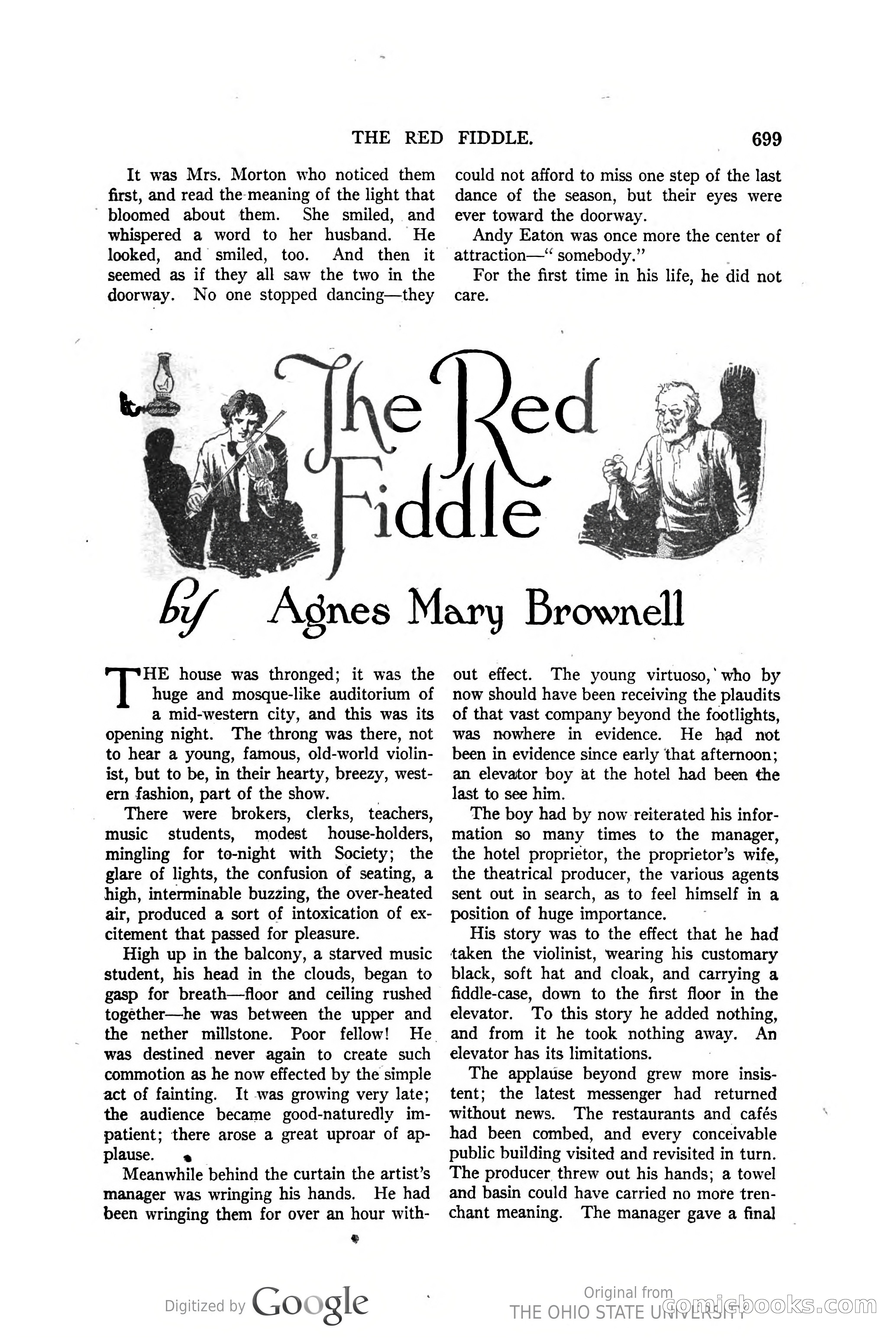
A restored page from Pulp Fiction, 1920. Page through the whole issue in the reader above.
📄 Transcribed text from this page (OCR, searchable)
Machine-transcribed from the original scan — historical spelling and the odd misread are preserved.
THE RED FIDDLE. It was Mrs. Morton who noticed them first, and read the meaning of the light that - bloomed about them. She smiled, and whispered a word to her husband. He looked, and smiled, too. And then it seemed as if they all saw the two in the doorway. No one stopped dancing—they . ‘ “ ao ‘ ‘ ‘ ~ ae ‘ 4 5 e vex. ; , s 4 5 eo ane HE house was thronged; it was the huge and mosque-like auditorium of a mid-western city, and this was its opening night. The throng was there, not to hear a young, famous, old-world violin- ist, but to be, in their hearty, breezy, west- ern fashion, part of the show. | There were brokers, clerks, teachers, music students, modest house-holders, mingling for to-night with Society; the glare of lights, the confusion of seating, a high, interminable buzzing, the over-heated air, produced a sort of intoxication of ex- citement that passed for pleasure. High up in the balcony, a starved music student, his head in the clouds, began to gasp for breath—floor and ceiling rushed together—he was between the upper and the nether millstone. Poor fellow! was destined never again to create such commotion as he now effected by the simple act of fainting. It was growing very late; the audience became good-naturedly im- patient; there arose a great uproar of ap- plause. «| Meanwhile behind the curtain the artist’s manager was wringing his hands. He had been wringing them for over an hour with- ® Digitized by (Go gle He. 699 could not afford to miss one step of the last dance of the season, but their eyes were ever toward the doorway. Andy Eaton was once more the center of _attraction—*‘ somebody.” For the first time in his life, he did not care. | Agnes Mary Brownell out effect. The young virtuoso,’ who by now should have been receiving the plaudits of that vast company beyond the footlights, was nowhere in evidence. He had not been in evidence since early that afternoon; an elevator boy at the hotel had been the last to see him. The boy had by now reiterated his infor- mation so many times to the manager, the hotel proprietor, the proprietor’s wife, the theatrical producer, the various agents sent out in search, as to feel himself in a position of huge importance. His story was to the effect that he had taken the violinist, wearing his customary black, soft hat and cloak, and carrying a fiddle-case, down to the first floor in the elevator. To this story he added nothing, and from it he took nothing away. An elevator has its limitations. The applause beyond grew more insis- tent; the latest messenger had returned without news. The restaurants and cafés had been combed, and every conceivable public building visited and revisited in turn. The producer threw out his hands; a towel and basin could have carried no mote tren- chant meaning. The manager gave a final S (COIN)