
Pulp Fiction, 1924 · page 12 of 186
Argosy All-Story Weekly, May 3, 1924 — page 12: what you’re looking at
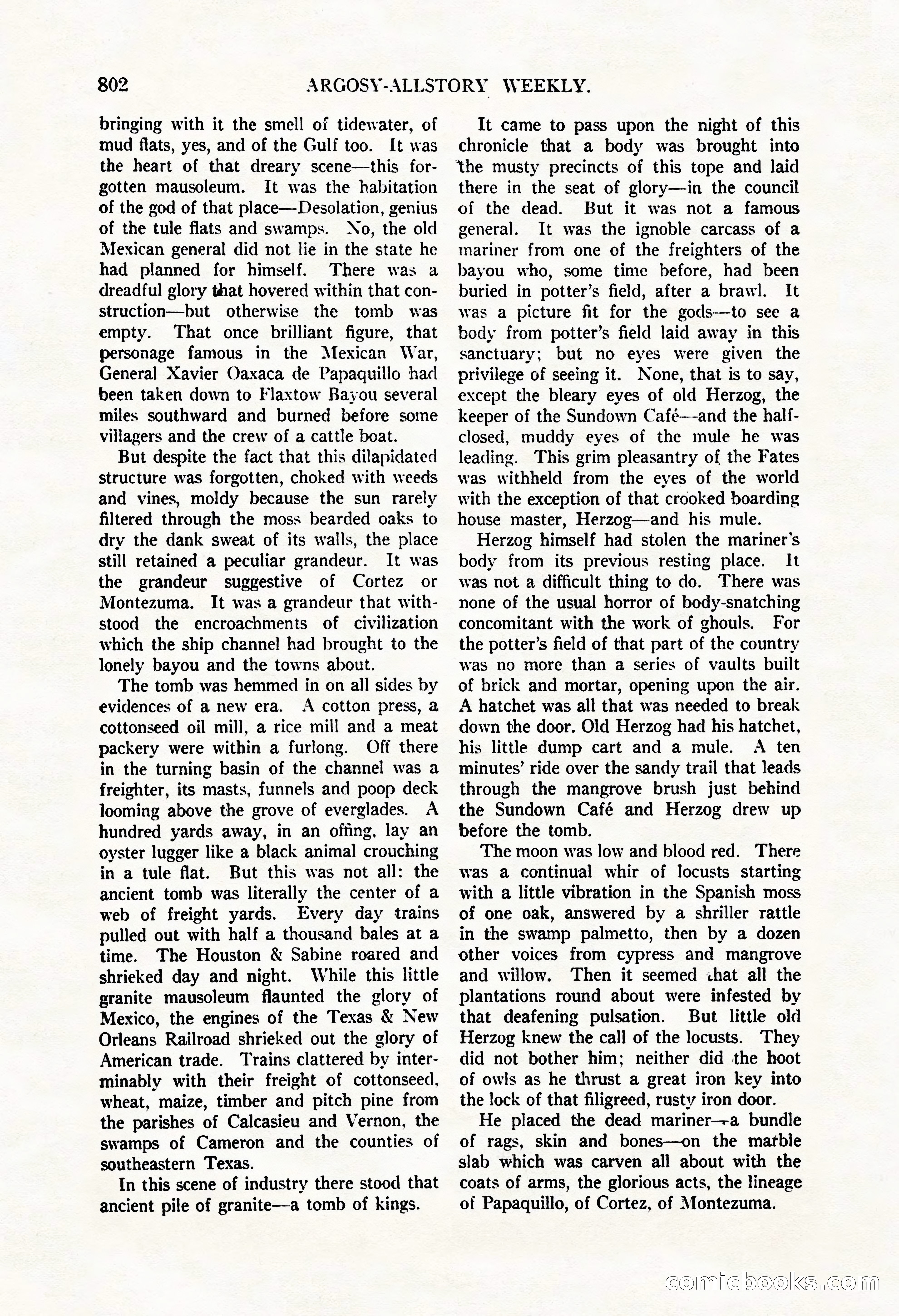
A restored page from Pulp Fiction, 1924. Page through the whole issue in the reader above.
📄 Transcribed text from this page (OCR, searchable)
Machine-transcribed from the original scan — historical spelling and the odd misread are preserved.
802 bringing with it the smell of tidewater, of mud flats, yes, and of the Gulf too. It was the heart of that dreary scene—this for- gotten mausoleum. It was the habitation of the god of that place—Desolation, genius of the tule flats and swamps. No, the old Mexican general did not lie in the state he had planned for himself. There was a dreadful glory that hovered within that con- struction—but otherwise the tomb was empty. That once brilliant figure, that personage famous in the Mexican War, General Xavier Oaxaca de Papaquillo had been taken down to Flaxtow Bayou several miles southward and burned before some villagers and the crew of a cattle boat. But despite the fact that this dilapidated structure was forgotten, choked with weeds and vines, moldy because the sun rarely filtered through the moss bearded oaks to dry the dank sweat of its walls, the place still retained a peculiar grandeur. It was the grandeur suggestive of Cortez or Montezuma. It was a grandeur that with- stood the encroachments of civilization which the ship channel had brought to the lonely bayou and the towns about. The tomb was hemmed in on all sides by evidences of a new era. A cotton press, a cottonseed oil mill, a rice mill and a meat packery were within a furlong. Off there in the turning basin of the channel was a freighter, its masts, funnels and poop deck looming above the grove of everglades. A hundred yards away, in an offing, lay an oyster lugger like a black animal crouching in a tule flat. But this was not all: the ancient tomb was literally the center of a web of freight yards. Every day trains pulled out with half a thousand bales at a time. The Houston & Sabine roared and shrieked day and night. While this little granite mausoleum flaunted the glory of Mexico, the engines of the Texas & New Orleans Railroad shrieked out the glory of American trade. Trains clattered by inter- minably with their freight of cottonseed, wheat, maize, timber and pitch pine from the parishes of Calcasieu and Vernon, the swamps of Cameron and the counties of southeastern Texas. In this scene of industry there stood that ancient pile of granite—a tomb of kings. ARGOSY-ALLSTORY WEEKLY. It came to pass upon the night of this chronicle that a body was brought into ‘the musty precincts of this tope and laid there in the seat of glory—in the council of the dead. But it was not a famous general. It was the ignoble carcass of a mariner from one of the freighters of the bayou who, some time before, had been buried in potter’s field, after a brawl. It was a picture fit for the gods-—to see a body from potter’s field laid away in this sanctuary; but no eyes were given the privilege of seeing it. None, that is to say, except the bleary eyes of old Herzog, the keeper of the Sundown Café—-and the half- closed, muddy eyes of the mule he was leading. This grim pleasantry of the Fates was withheld from the eyes of the world with the exception of that crooked boarding house master, Herzog—and his mule. Herzog himself had stolen the mariner'’s body from its previous resting place. It was not a difficult thing to do. There was none of the usual horror of body-snatching concomitant with the work of ghouls. For the potter’s field of that part of the country was no more than a series of vaults built of brick and mortar, opening upon the air. A hatchet was all that was needed to break down the door. Old Herzog had his hatchet, his little dump cart and a mule. A ten minutes’ ride over the sandy trail that leads through the mangrove brush just behind the Sundown Café and Herzog drew up before the tomb. The moon was low and blood red. There was a continual whir of locusts starting with a little vibration in the Spanish moss of one oak, answered by a shriller rattle in the swamp palmetto, then by a dozen other voices from cypress and mangrove and willow. Then it seemed chat all the plantations round about were infested by that deafening pulsation. But little old Herzog knew the call of the locusts. They did not bother him; neither did the hoot of owls as he thrust a great iron key into the lock of that filigreed, rusty iron door. He placed the dead mariner—-a bundle of rags, skin and bones—on the marble slab which was carven all about with the coats of arms, the glorious acts, the lineage of Papaquillo, of Cortez, of Montezuma. COnmmicCoool ©