
Pulp Fiction, 1914 · page 245 of 266
The Argosy, Vol. 76, No. 3 — page 245: what you’re looking at
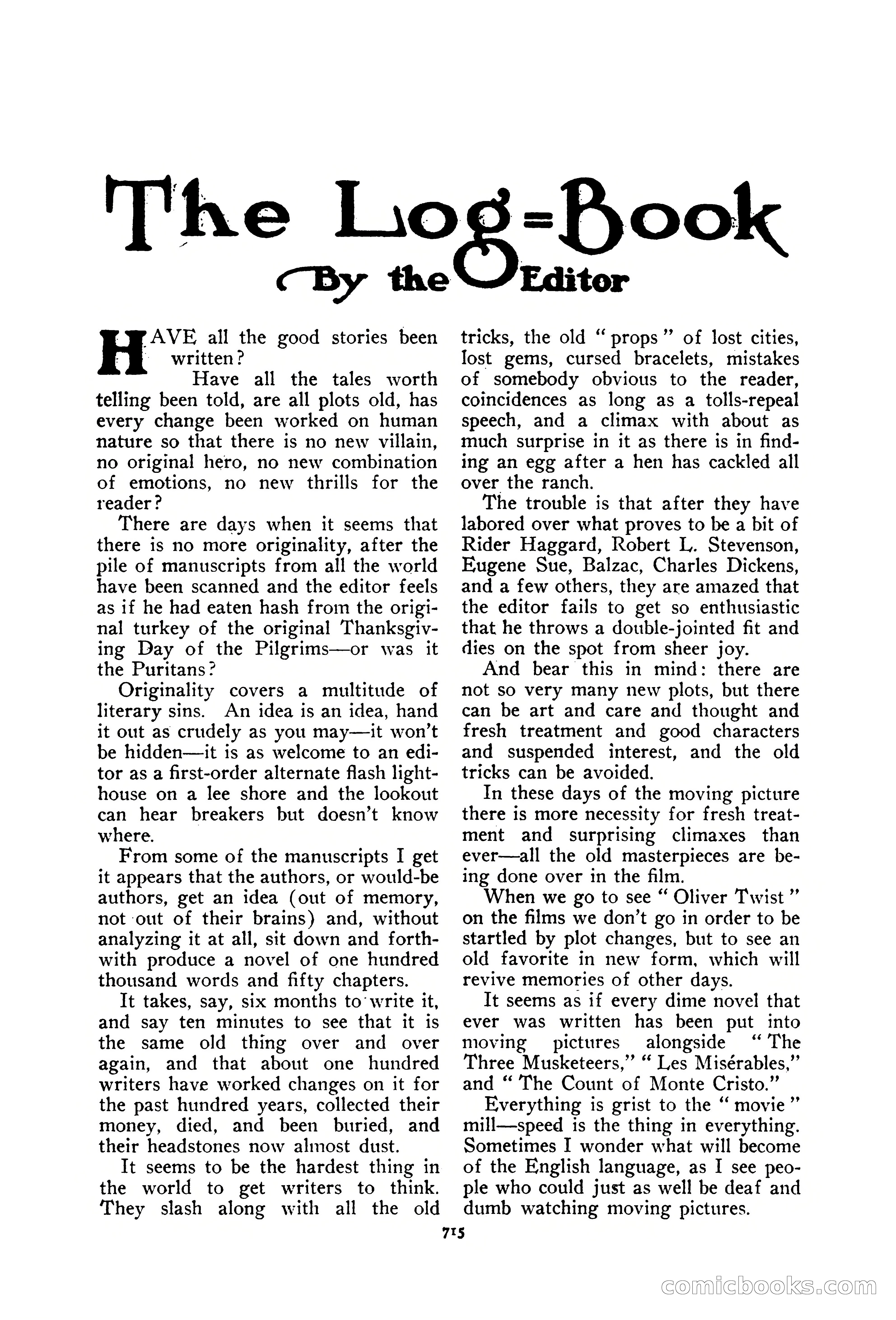
A restored page from Pulp Fiction, 1914. Page through the whole issue in the reader above.
📄 Transcribed text from this page (OCR, searchable)
Machine-transcribed from the original scan — historical spelling and the odd misread are preserved.
The Lo c By the written? Have all the tales worth telling been told, are all plots old, has every change been worked on human nature so that there is no new villain, no original hero, no new combination of emotions, no new thrills for the reader? There are days when it seems that there 1s no more originality, after the pile of manuscripts from all the world have been scanned and the editor feels as if he had eaten hash from the origi- nal turkey of the original Thanksgiv- ing Day of the Pilgrims—or was it the Puritans? Originality covers a multitude of literary sins. An idea is an idea, hand it out as crudely as you may—it won't be hidden—it is as welcome to an edi- tor as a first-order alternate flash light- house on a lee shore and the lookout can hear breakers but doesn’t know where. From some of the manuscripts I get it appears that the authors, or would-be authors, get an idea (out of memory, not out of their brains) and, without analyzing it at all, sit down and forth- with produce a novel of one hundred thousand words and fifty chapters. It takes, say, six months to write it, and say ten minutes to see that it is the same old thing over and over again, and that about one hundred writers have worked changes on it for the past hundred years, collected their money, died, and been buried, and their headstones now almost dust. It seems to be the hardest thing in the world to get writers to think. They slash along with all the old Hs: all the good stories been 05-0 -Book 99 tricks, the old “props” of lost cities, lost gems, cursed bracelets, mistakes of somebody obvious to the reader, coincidences as long as a tolls-repeal speech, and a climax with about as much surprise in it as there is in find- ing an egg after a hen has cackled all over the ranch. The trouble is that after they have labored over what proves to be a bit of Rider Haggard, Robert L. Stevenson, Fugene Sue, Balzac, Charles Dickens, and a few others, they are amazed that the editor fails to get so enthusiastic that he throws a double-jointed fit and dies on the spot from sheer joy. And bear this in mind: there are not so very many new plots, but there can be art and care and thought and fresh treatment and good characters and suspended interest, and the old tricks can be avoided. In these days of the moving picture there 1s more necessity for fresh treat- ment and surprising climaxes than ever—all the old masterpieces are be- ing done over in the film. When we go to see “ Oliver Twist ” on the films we don’t go in order to be startled by plot changes, but to see an old favorite in new form, which will revive memories of other days. It seems as if every dime novel that ever was written has been put into moving pictures alongside “ The Three Musketeers,” “ Les Misérables,” and “ The Count of Monte Cristo.” Everything is grist to the “ movie” mill—speed is the thing in everything. Sometimes I wonder what will become of the English language, as I see peo- ple who could just as well be deaf and dumb watching moving pictures. 715 COIN Ghooks CO@