
Pulp Fiction, 1922 · page 153 of 187
Argosy All-Story Weekly — page 153: what you’re looking at
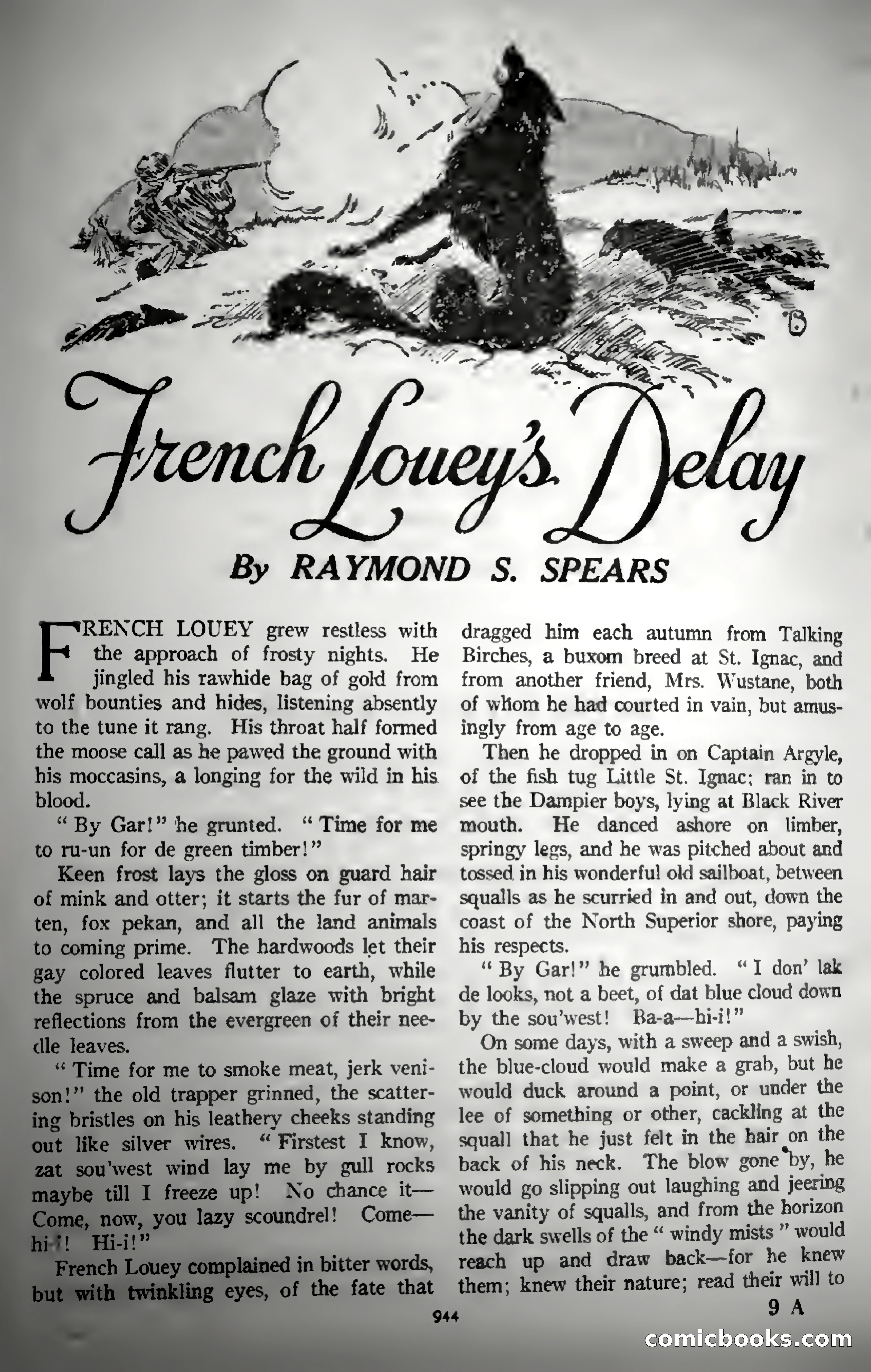
A restored page from Pulp Fiction, 1922. Page through the whole issue in the reader above.
📄 Transcribed text from this page (OCR, searchable)
Machine-transcribed from the original scan — historical spelling and the odd misread are preserved.
the approach of frosty nights. He jingled his rawhide bag of gold from wolf bounties and hides, listening absently to the tune it rang. His throat half formed the moose call as he pawed the ground with his moccasins, a longing for the wild in his blood. “By Gar!” he grunted. ‘“ Time for me to ru-un for de green timber!” Keen frost lays the gloss on guard hair of mink and otter; it starts the fur of mar- ten, fox pekan, and all the land animals _ to coming prime. The hardwoods let their _ gay colored leaves flutter to earth, while _ the spruce and balsam glaze with bright _ reflections from the evergreen of their nee- dle leaves. “Time for me to smoke meat, jerk veni- n!” the old trapper grinned, the scatter- on his leathery cheeks standing er wires. “ Firstest I know, est wind lay me by gull rocks [ freeze up! No chance it— lazy scoundrel! Come— al a . — i , co mi te that By RAYMOND S. SPEARS Pete an LOUEY grew restless with dragged him each autumn from Talking Birches, a buxom breed at St. Ignac, and from another friend, Mrs. Wustane, both of wliom he had courted in vain, but amus- ingly from age to age. Then he dropped in on Captain Argyle, of the fish tug Little St. Ignac; ran in to see the Dampier boys, lying at Black River mouth. He danced ashore on _ limber, springy legs, and he was pitched about and tossed in his wonderful old sailboat, between squalls as he scurried in and out, down the coast of the North Superior shore, paying his respects. ‘By Gar!” he grumbled. “I don’ lak de looks, not a beet, of dat blue cloud down by the sou’west! Ba-a—hi-i!” On some days, with a sweep and a swish, the blue-cloud would make a grab, but he would duck around a point, or under the lee of something or other, cackling at the squall that he just felt in the hair on the back of his neck. The blow gone by, he would go slipping out laughing and jeering the vanity of squalls, and from the horizon the dark swells of the “‘ windy mists ” would reach up and draw back—for he knew them; knew their nature; read their will to 9A