
Pulp Fiction, 1922 · page 77 of 187
Argosy All-Story Weekly — page 77: what you’re looking at
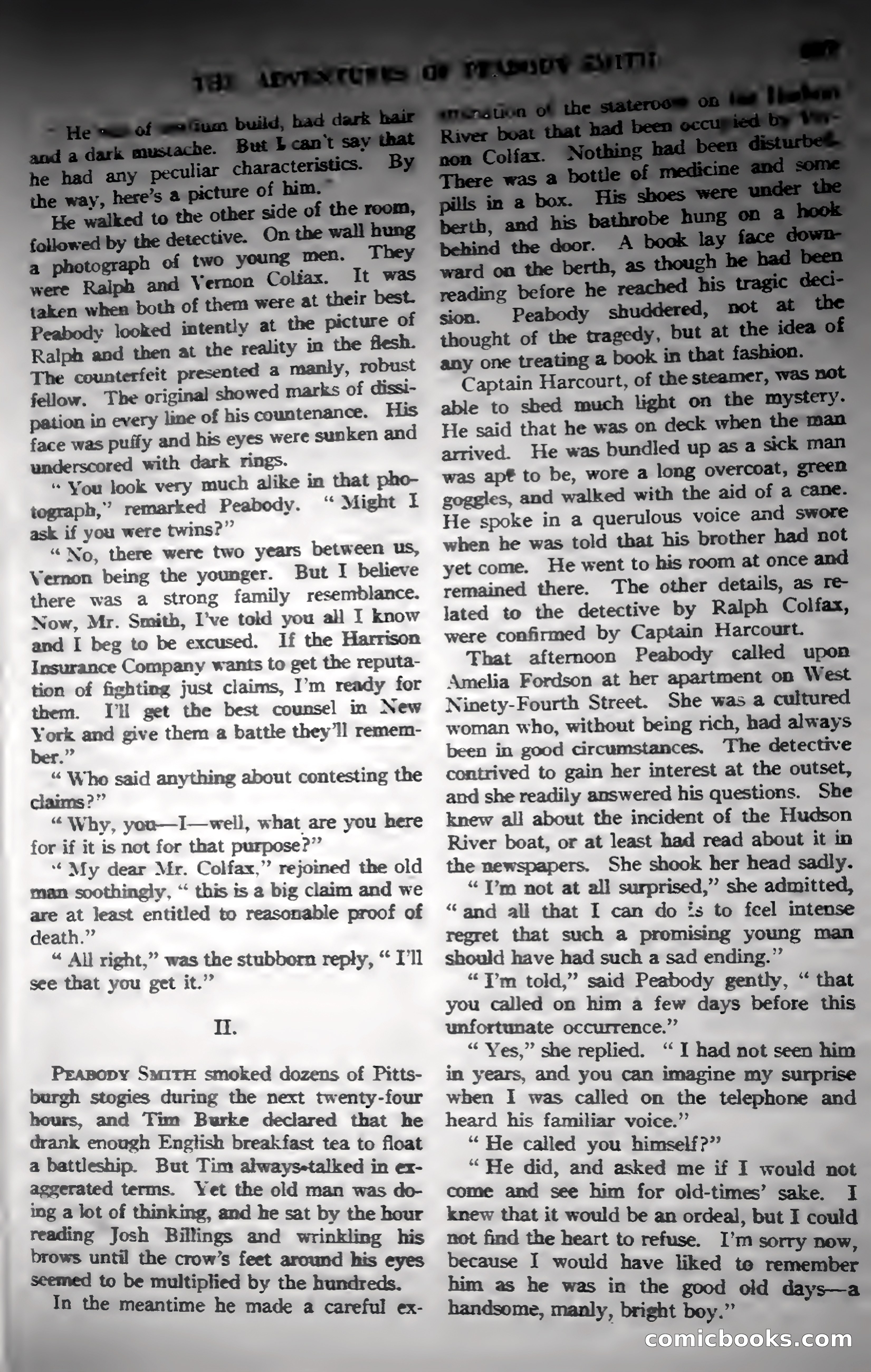
A restored page from Pulp Fiction, 1922. Page through the whole issue in the reader above.
📄 Transcribed text from this page (OCR, searchable)
Machine-transcribed from the original scan — historical spelling and the odd misread are preserved.
~ oe a photograph of two young men. They were and Vernon Colfax. It was taken when both of them were at their best. Peabody looked intently at the picture of Ralph and then at the reality in the flesh. The counterfeit presented a manly, robust fellow. The original showed marks of dissi- pation in every line of his countenance. Hus face was puffy and his eyes were sunken and underscored with dark rings. “ You look very much alike in that pho- tograph,”’ remarked Peabody. ‘“‘ Might I ask if you were twins?” “No, there were two years between us, Vernon being the younger. But I believe there was a strong family resemblance. Now, Mr. Smith, I’ve told you all I know and I beg to be excused. If the Harrison Insurance Company wants to get the reputa- tion of fighting just claims, I’m ready for them. I'll get the best counsel in New York and give them a battle they'll remem- ber.’ “ Who said anything about contesting the claims?” “Why, you—I—well, what are you here for if it is not for that purpose?” “My dear Mr. Colfax,” rejoined the old man soothingly, ‘‘ this is a big claim and we are at least entitled to reasonable proof of death.” “ All right,” was the stubborn reply, “ I'll see that you get it.” It. PEaBopy SmitH smoked dozens of Pitts- burgh stogies during the next twenty-four hours, and Tim Burke declared that he drank enough English breakfast tea to float a battleship. But Tim always-talked in ex- aggerated terms. Yet the old man was do- ing a lot of thinking, and he sat by the hour reading Josh Billings and wrinkling his brows until the crow’s feet around his eyes seemed to be multiplied by the hundreds. In the meantime he made a careful ex- thought of the tragedy, but at the 1c any one treating a book in that fashion. Captain Harcourt, of the steamer, ° able to shed much light on the B He said that he was on deck when thet = arrived. He was bundled up as 4 sick man was apf to be, wore a long overcoat, green goggles, and walked with the aid of a cane. He spoke in a querulous voice and swore when he was told that his brother had not yet come. He went to his room at once and remained there. The other details, as Te lated to the detective by Ralph Colfax, were confirmed by Captain Harcourt. That afternoon Peabody called upon Amelia Fordson at her apartment on West Ninety-Fourth Street. She was a cultured woman who, without being rich, had always been in good circumstances. The detective contrived to gain her interest at the outset, and she readily answered his questions. She knew all about the incident of the Hudson River boat, or at least had read about it in the newspapers. She shook her head sadly. “ 1’m not at all surprised,” she admitted, ‘“‘and all that I can do ‘s to feel imtense regret that such a promising young man should have had such a sad ending.” ‘“‘7’m told,” said Peabody gently, “ that you called on him a few days before this unfortunate occurrence.” ““ Yes,” she replied. “I had not seen him in years, and you can imagine my surprise when I was called on the telephone and heard his familiar voice.”’ ‘“* He called you himself?” “He did, and asked me if I would not come and see him for old-times’ sake. I knew that it would be an ordeal, but I could not find the heart to refuse. I’m sorry now, because I would have liked to remember him as he was in the good old days—a handsome, manly, bright boy.” comicbooks com