
Pulp Fiction, 1868 · page 7 of 97
Ballou's Monthly Magazine, Vol. XXVII, No. 1 — page 7: what you’re looking at
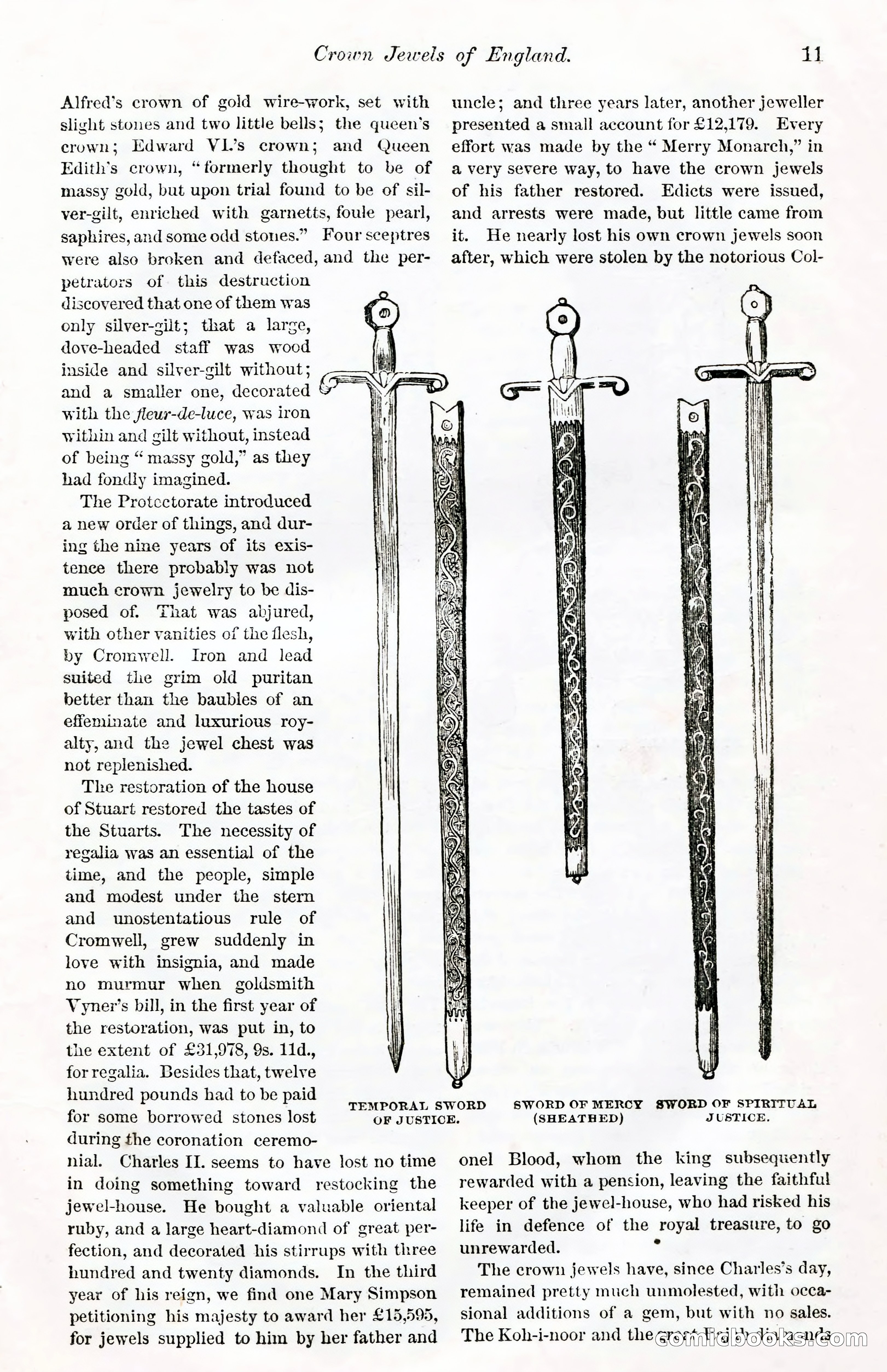
A restored page from Pulp Fiction, 1868. Page through the whole issue in the reader above.
📄 Transcribed text from this page (OCR, searchable)
Machine-transcribed from the original scan — historical spelling and the odd misread are preserved.
Crown Jewels of England. Alfred’s crown of gold wire-work, set with slight stones and two little bells; the queen's crown; Edward V1.’s crown; and Queen Edith’s crown, “formerly thought to be of massy gold, but upon trial found to be of sil- ver-gilt, enriched with garnetts, foule pearl, saphires, and some odd stones.” Four sceptres were also broken and defaced, and the per- petrators of this destruction discovered that one of them was only silver-cilt; that a large, dove-headed staff was wood inside and silver-gilt without; and a smaller one, decorated with the fleur-de-luce, was iron within and gilt without, instead of being “ massy gold,” as they had fondly imagined. The Protectorate introduced a new order of things, and dur- ing the nine years of its exis- tence there probably was not much crown jewelry to be dis- posed of. That was abjured, with other vanities of the flesh, by Cromwell. Iron and lead suited tlie grim old puritan better than the baubles of an effeminate and luxurious roy- alty, and the jewel chest was not replenished. The restoration of the house of Stuart restored the tastes of the Stuarts. The necessity of regalia was an essential of the time, and the people, simple and modest under the stern and unostentatious rule of Cromwell, grew suddenly in love with insignia, and made no murmur when goldsmith Vyner’s bill, in the first year of the restoration, was put in, to the extent of £31,978, 9s. 11d., for regalia. Besides that, twelve hundred pounds had to be paid for some borrowed stones lost during the coronation ceremo- nial. Charles II. seems to have lost no time in doing something toward restocking the jewel-house. He bought a valuable oriental ruby, and a large heart-diamond of great per- fection, and decorated his stirrups with three hundred and twenty diamonds. In the third year of his reign, we find one Mary Simpson petitioning his majesty to award her £15,595, for jewels supplied to him by her father and TEMPORAL SWORD OF JUSTICE. 41 uncle; and three years later, another jeweller presented a small account for £12,179. Every effort was made by the “ Merry Monarch,” in a very severe way, to have the crown jewels of his father restored. Edicts were issued, and arrests were made, but little came from it. He nearly lost his own crown jewels soon after, which were stolen by the notorious Col- SWORD OF MERCY SWORD OF SPIRITUAL (SHEATHED) JUSTICE. onel Blood, whom the king subsequently rewarded with a pension, leaving the faithful keeper of the jewel-house, who had risked his life in defence of the royal treasure, to go unrewarded. . The crown jewels have, since Charles’s day, remained pretty much unmolested, with occa- sional additions of a gem, but with no sales. The Koh-i-noor and theéregtphird|svovey -aeneso) S|