
Pulp Fiction, 1935 · page 112 of 132
Bill Barnes Air Adventurer, July 1935 — page 112: what you’re looking at
A restored page from Pulp Fiction, 1935. Page through the whole issue in the reader above.
📄 Transcribed text from this page (OCR, searchable)
Machine-transcribed from the original scan — historical spelling and the odd misread are preserved.
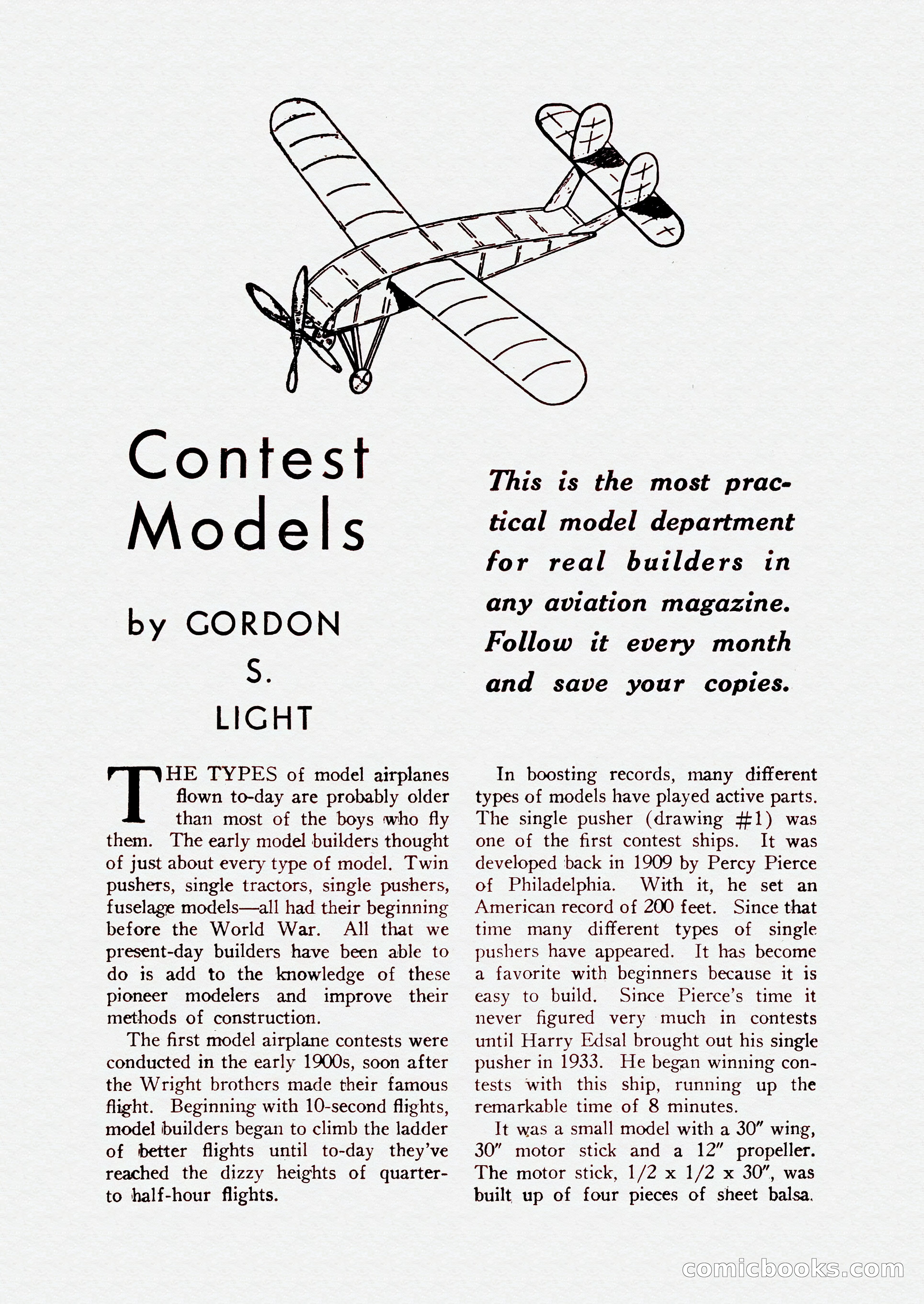
Contest Models by GORDON S: LICHT HE TYPES of model airplanes flown to-day are probably older than most of the boys who fly them. The early model builders thought of just about every type of model. Twin pushers, single tractors, single pushers, fuselage models—all had their beginning before the World War. All that we present-day builders have been able to do is add to the knowledge of these pioneer modelers and improve their methods of construction. The first model airplane contests were conducted in the early 1900s, soon after the Wright brothers made their famous flight. Beginning with 10-second flights, model builders began to climb the ladder of better flights until to-day they’ve reached the dizzy heights of quarter- to half-hour flights. This is the most prac- tical model department for real builders in any aviation magazine. Follow it every month and save your copies. In boosting records, many different types of models have played active parts. The single pusher (drawing #1) was one of the first contest ships. It was developed back in 1909 by Percy Pierce of Philadelphia. With it, he set an American record of 200 feet. Since that time many different types of single pushers have appeared. It has become a favorite with beginners because it is easy to build. Since Pierce’s time it never figured very much in contests until Harry Edsal brought out his single pusher in 1933. He began winning con- tests with this ship, running up the remarkable time of 8 minutes. It was a small model with a 30” wing, 30” motor stick and a 12” propeller. The motor stick, 1/2 x 1/2 x 30”, was built up of four pieces of sheet balsa. (C© Ghook CO