
Pulp Fiction, 1935 · page 25 of 132
Bill Barnes Air Adventurer, July 1935 — page 25: what you’re looking at
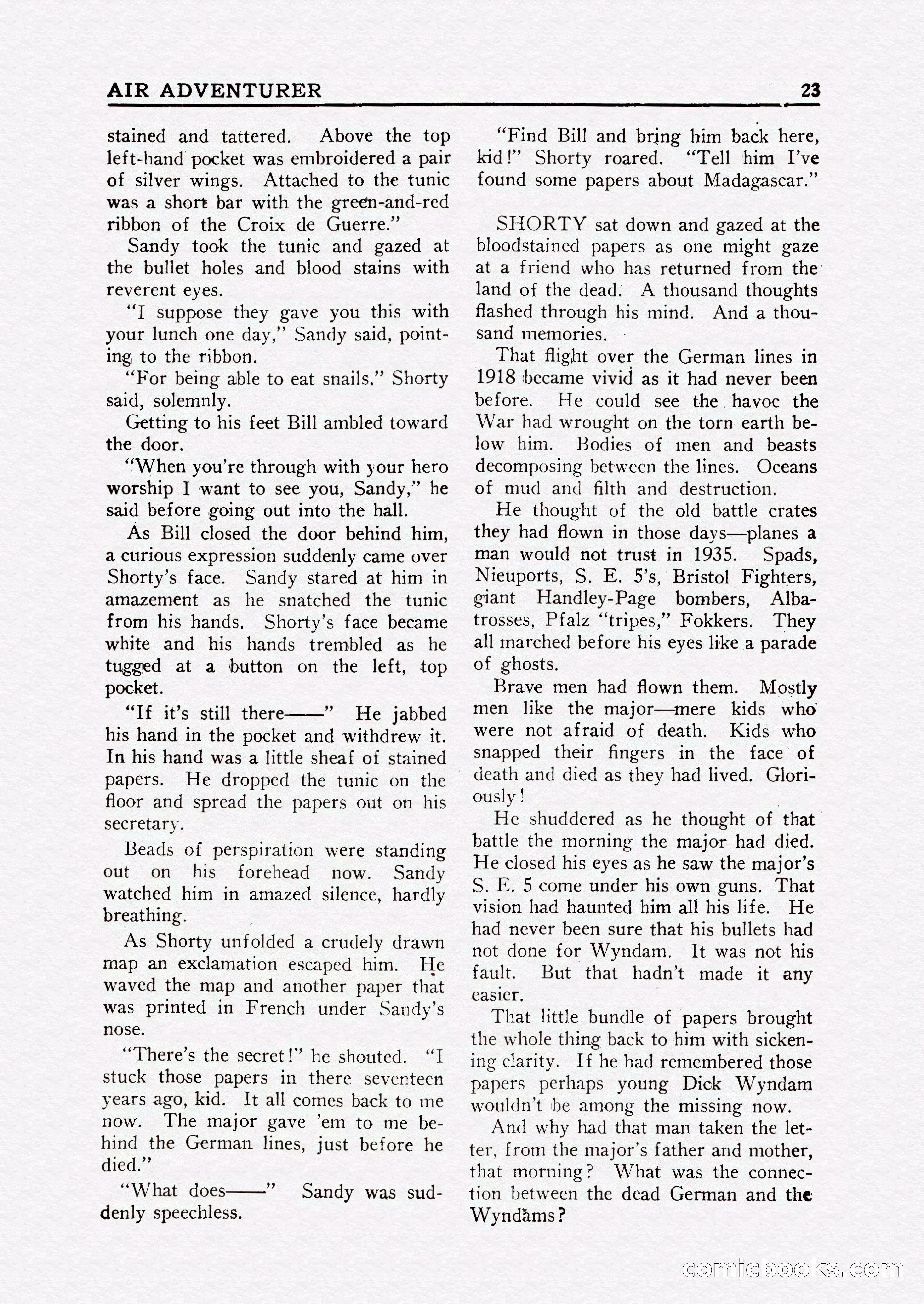
A restored page from Pulp Fiction, 1935. Page through the whole issue in the reader above.
📄 Transcribed text from this page (OCR, searchable)
Machine-transcribed from the original scan — historical spelling and the odd misread are preserved.
AIR ADVENTURER stained and tattered. Above the top left-hand pocket was embroidered a pair of silver wings. Attached to the tunic was a short bar with the green-and-red ribbon of the Croix de Guerre.” Sandy took the tunic and gazed at the bullet holes and blood stains with reverent eyes. “I suppose they gave you this with your lunch one day,” Sandy said, point- ing to the ribbon. “For being able to eat snails,” Shorty said, solemnly. Getting to his feet Bill ambled toward the door. “When you’re through with your hero worship I want to see you, Sandy,” he said before going out into the hall. As Bill closed the door behind him, a curious expression suddenly came over Shorty’s face. Sandy stared at him in amazement as he snatched the tunic from his hands, Shorty’s face became white and his hands trembled as he tugged at a button on the left, top pocket. “Tf it’s still there ” He jabbed his hand in the pocket and withdrew it. In his hand was a little sheaf of stained papers. He dropped the tunic on the floor and spread the papers out on his secretary. Beads of perspiration were standing out on his forehead now. Sandy watched him in amazed silence, hardly breathing. ; As Shorty unfolded a crudely drawn map an exclamation escaped him. He waved the map and another paper that was printed in French under Sandy’s nose. “There’s the secret!” he shouted. “I stuck those papers in there seventeen years ago, kid. It all comes back to me now. ‘The major gave ’em to me be- hind the German lines, just before he died.” “What does 4 denly speechless. Sandy was sud- 23 Oma “Find Bill and bring him back here, kid!” Shorty roared. “Tell him I’ve found some papers about Madagascar.” SHORTY sat down and gazed at the bloodstained papers as one might gaze at a friend who has returned from the land of the dead: A thousand thoughts flashed through his mind. And a thou- sand memories. That flight over the German lines in 1918 became vivid as it had never been before. He could see the havoc the War had wrought on the torn earth be- low him. Bodies of men and _ beasts decomposing between the lines. Oceans of mud and filth and destruction. He thought of the old battle crates they had flown in those days—planes a man would not trust in 1935. Spads, Nieuports, S. E. 5’s, Bristol Fighters, giant Handley-Page bombers, Alba- trosses, Pfalz “‘tripes,’ Fokkers. They all marched before his eyes like a parade of ghosts. Brave men had flown them. Mostly men like the major—mere kids who were not afraid of death. Kids who snapped their fingers in the face of - death and died as they had lived. Glori- ously ! He shuddered as he thought of ‘that battle the morning the major had died. He closed his eyes as he saw the major’s S. E. 5 come under his own guns. That vision had haunted him all his life. He had never been sure that his bullets had not done for Wyndam. It was not his fault. But that hadn’t made it any easier, That little bundle of papers brought the whole thing back to him with sicken- ing clarity. If he had remembered those papers perhaps young Dick Wyndam wouldn't be among the missing now. And why had that man taken the let- ter, from the major’s father and mother, that morning? What was the connec- tion between the dead German and the Wyndams? CO clo@olx< CO