
Pulp Fiction, 1921 · page 58 of 204
Adventure Magazine Cover — page 58: what you’re looking at
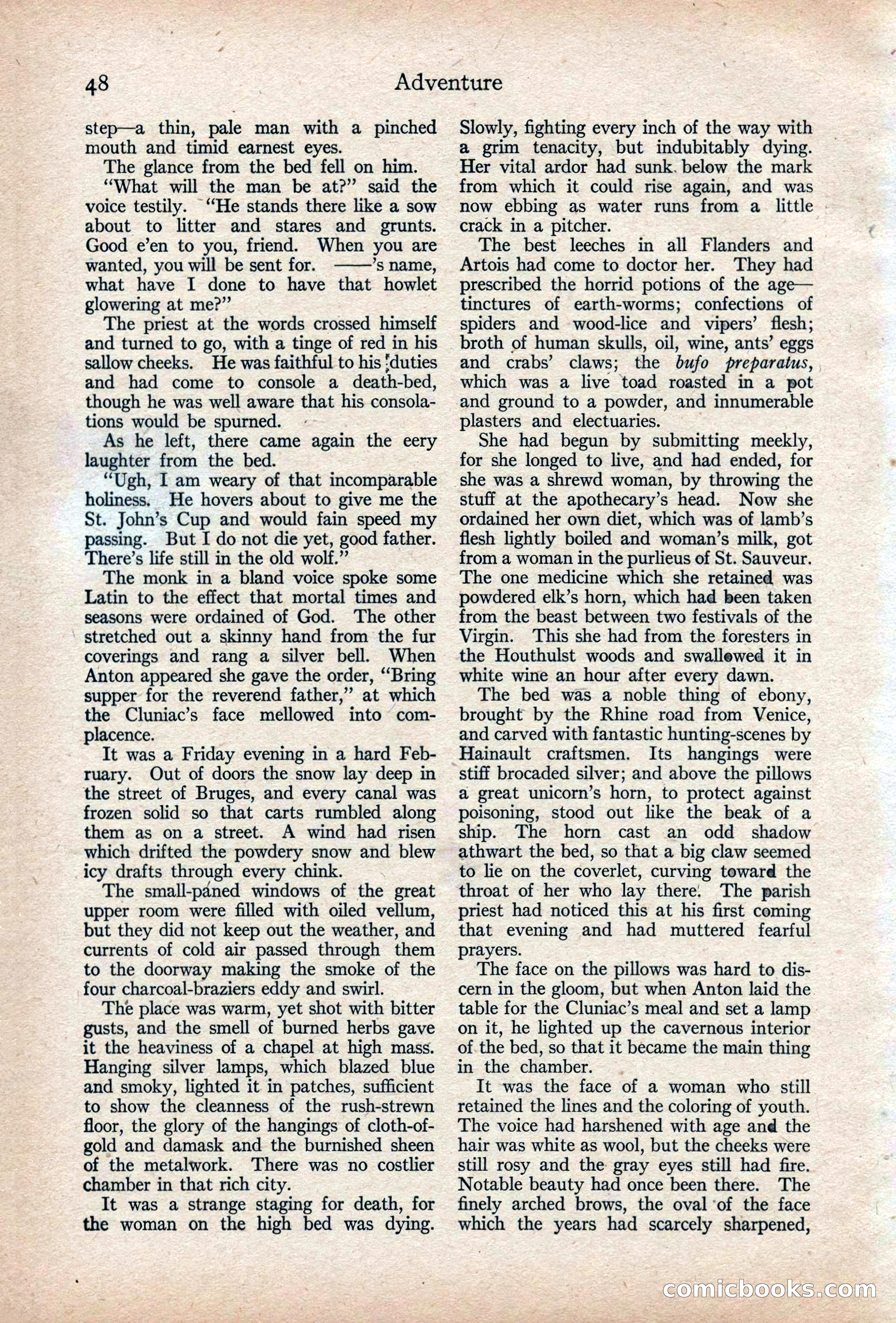
A restored page from Pulp Fiction, 1921. Page through the whole issue in the reader above.
📄 Transcribed text from this page (OCR, searchable)
Machine-transcribed from the original scan — historical spelling and the odd misread are preserved.
48 step—a thin, pale man with a pinched mouth and timid earnest eyes. The glance from the bed fell on him. “What will the man be at?” said the voice testily. ‘He stands there like a sow about to litter and stares and grunts. Good e’en to you, friend. When you are wanted, you will be sent for. ———’s name, what have I done to have that howlet glowering at me?” The priest at the words crossed himself and turned to go, with a tinge of red in his sallow cheeks. He was faithful to his ‘duties and had come to console a death-bed, though he was well aware that his consola- tions would be spurned. As he left, there came again the eery laughter from the bed. “Ugh, I am weary of that incomparable holiness, He hovers about to give me the St. John’s Cup and would fain speed my passing. But I do not die yet, good father. There’s life still in the old wolf.” The monk in a bland voice spoke some Latin to the effect that mortal times and seasons were ordained of God. The other stretched out a skinny hand from the fur coverings and rang a silver bell. When Anton appeared she gave the order, “Bring supper for the reverend father,” at which the Cluniac’s face mellowed into com- placence. It was a Friday evening in a hard Feb- ruary. Out of doors the snow lay deep in the street of Bruges, and every canal was frozen solid so that carts rumbled along them as on a street. A wind had risen which drifted the powdery snow and blew icy drafts through every chink. The small-paned windows of the great upper room were filled with oiled vellum, but they did not keep out the weather, and currents of cold air passed through them to the doorway making the smoke of the four charcoal-braziers eddy and swirl. The place was warm, yet shot with bitter gusts, and the smell of burned herbs gave it the heaviness of a chapel at high mass. Hanging silver lamps, which blazed blue and smoky, lighted it in patches, sufficient to show the cleanness of the rush-strewn floor, the glory of the hangings of cloth-of- gold and damask and the burnished sheen of the metalwork. There was no costlier chamber in that rich city. It was a strange staging for death, for the woman on the high bed was dying. Adventure Slowly, fighting every inch of the way with a grim tenacity, but indubitably dying. Her vital ardor had sunk. below the mark from which it could rise again, and was now ebbing as water runs from a little . crack in a pitcher. The best leeches in all Flanders and Artois had come to doctor her. They had prescribed the horrid potions of the age— tinctures of earth-worms; confections of spiders and wood-lice and vipers’ flesh; broth of human skulls, oil, wine, ants’ eggs and crabs’ claws; the bufo preparatus, which was a live toad roasted in a pot and ground to a powder, and innumerable plasters and electuaries. She had begun by submitting meekly, for she longed to live, and had ended, for she was a shrewd woman, by throwing the stuff at the apothecary’s head. Now she ordained her own diet, which was of lamb’s flesh lightly boiled and woman’s milk, got from a woman in the purlieus of St. Sauveur. The one medicine which she retained was powdered elk’s horn, which had been taken from the beast between two festivals of the Virgin. This she had from the foresters in the Houthulst woods and swallewed it in white wine an hour after every dawn. The bed was a noble thing of ebony, brought by the Rhine road from Venice, and carved with fantastic hunting-scenes by Hainault craftsmen. Its hangings were stiff brocaded silver; and above the pillows a great unicorn’s horn, to protect against poisoning, stood out like the beak of a ship. The horn cast an odd _ shadow athwart the bed, so that a big claw seemed to lie on the coverlet, curving toward the throat of her who lay there. The parish priest had noticed this at his first coming that evening and had muttered fearful prayers. The face on the pillows was hard to dis- cern in the gloom, but when Anton laid the table for the Cluniac’s meal and set a lamp on it, he lighted up the cavernous interior of. the bed, so that it became the main thing in the chamber. It was the face of a woman who still retained the lines and the coloring of youth. The voice had harshened with age and the hair was white as wool, but the cheeks were still rosy and the gray eyes still had fire. Notable beauty had once been there. The finely arched brows, the oval ‘of the face which the years had scarcely sharpened, Gomichbooks (E)