
Pulp Fiction, 1928 · page 42 of 156
Argosy All-Story Weekly, May 5, 1928 — page 42: what you’re looking at
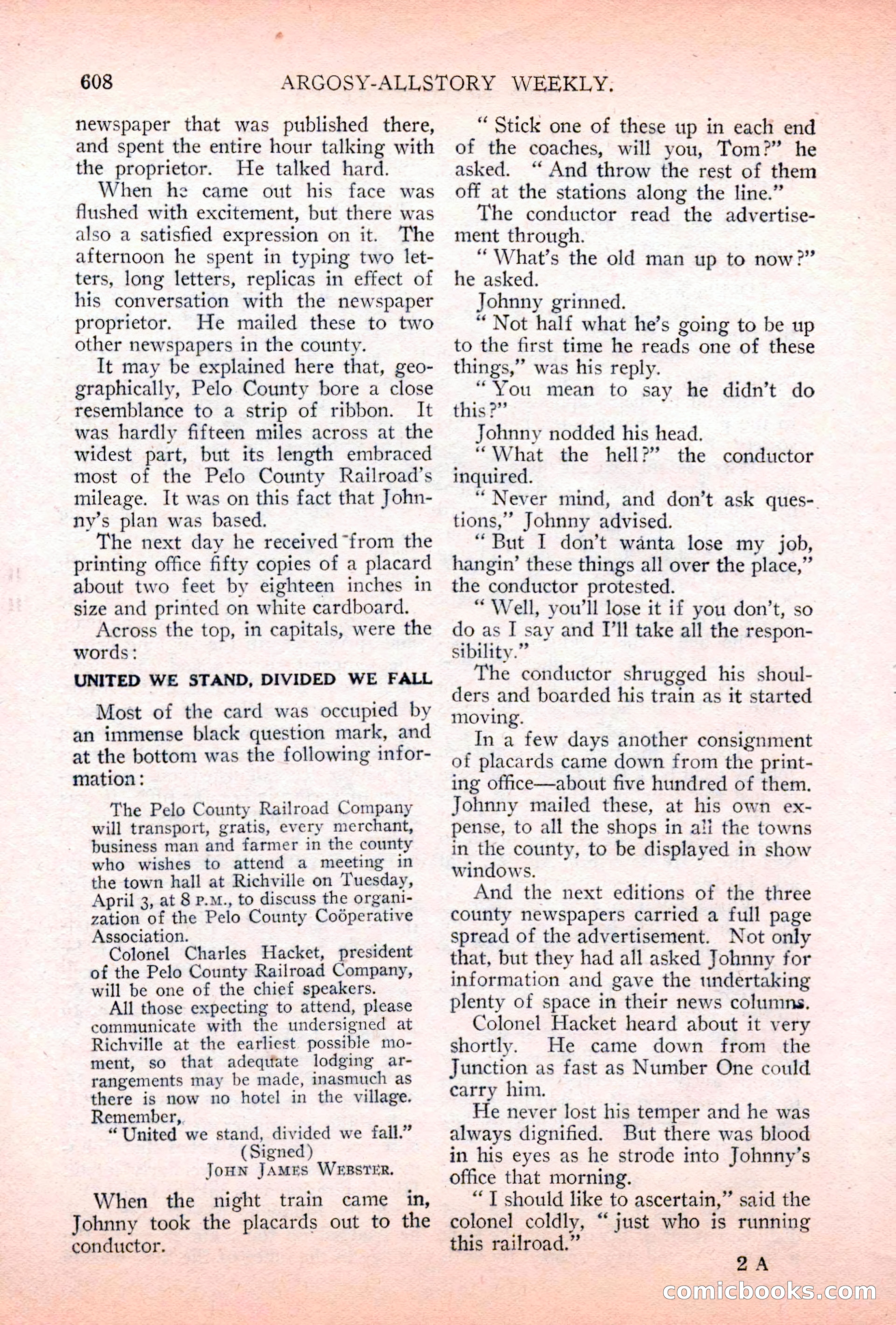
A restored page from Pulp Fiction, 1928. Page through the whole issue in the reader above.
📄 Transcribed text from this page (OCR, searchable)
Machine-transcribed from the original scan — historical spelling and the odd misread are preserved.
& 608 newspaper that was published there, and spent the entire hour talking with the proprietor. He talked hard. When he came out his face was flushed with excitement, but there was also a satisfied expression on it. The afternoon he spent in typing two let- ters, long letters, replicas in effect of his conversation with the newspaper proprietor. He mailed these to two other newspapers in the county. It may be explained here that, geo- graphically, Pelo County bore a close resemblance to a strip of ribbon. It was hardly fifteen miles across at the widest part, but its length embraced most of the Pelo County Railroad’s mileage. It was on this fact that John- ny’s plan was based. The next day he received from the printing office fifty copies of a placard about two feet by eighteen inches in size and printed on white cardboard. Across the top, in capitals, were the words: UNITED WE STAND, DIVIDED WE FALL Most of the card was occupied by an immense black question mark, and at the bottom was the following infor- mation: The Pelo County Railroad Company will transport, gratis, every merchant, business man and farmer in the county who wishes to attend a meeting in the town hall at Richville on Tuesday, April 3, at 8 p.M., to discuss the organi- zation of the Pelo County Codperative Association. Colonel Charles Hacket, president of the Pelo County Railroad Company, will be one of the chief speakers. All those expecting to attend, please communicate with the undersigned at Richville at the earliest possible mo- ment, so that adeqtfate lodging ar- rangements may be made, inasmuch as there is now no hotel in the village. Remember, “United we stand, divided we fall.” (Signed ) JoHN JAMES WEBSTER. When the night train came in, Johnny took the placards out to the conductor. ARGOSY-ALLSTORY WEEKLY: “ Stick one of these up in each end of the coaches, will you, Tom?” he asked. “ And throw the rest of them off at the stations along the line.” The conductor read the advertise- ment through. ‘ What’s the old man up to now?” he asked. Johnny grinned. “ Not half what he’s going to be up to the first time he reads one of these things,” was his reply. “You mean to say he didn’t do this?” Johnny nodded his head. “What the hell?” the conductor inquired. “ Never mind, and don’t ask ques- tions,” Johnny advised. “But I don’t wanta lose my job, hangin’ these things all over the place,” the conductor protested. “ Well, you'll lose it if you don’t, so do as I say and I'll take all the respon- sibility.” The conductor shrugged his shoul- ders and boarded his train as it started moving. In a few days another consignment of placards came down from the print- ing office—about five hundred of them. Johnny mailed these, at his own ex- pense, to all the shops in ali the towns in the county, to be displayed in show windows. And the next editions of the three county newspapers carried a full page spread of the advertisement. Not only that, but they had all asked Johnny for information and gave the undertaking plenty of space in their news columns. Colonel Hacket heard about it very shortly. He came down from the Junction as fast as Number One could carry him. He never lost his temper and he was always dignified. But there was blood in his eyes as he strode into Johnny’s office that morning. “T should like to ascertain,” said the colonel coldly, “‘ just who is running this railroad.” 2A EOLMIC OOO KS (E@)