
Pulp Fiction, 1920 · page 21 of 164
Argosy, Vol. 122, No. 1 — page 21: what you’re looking at
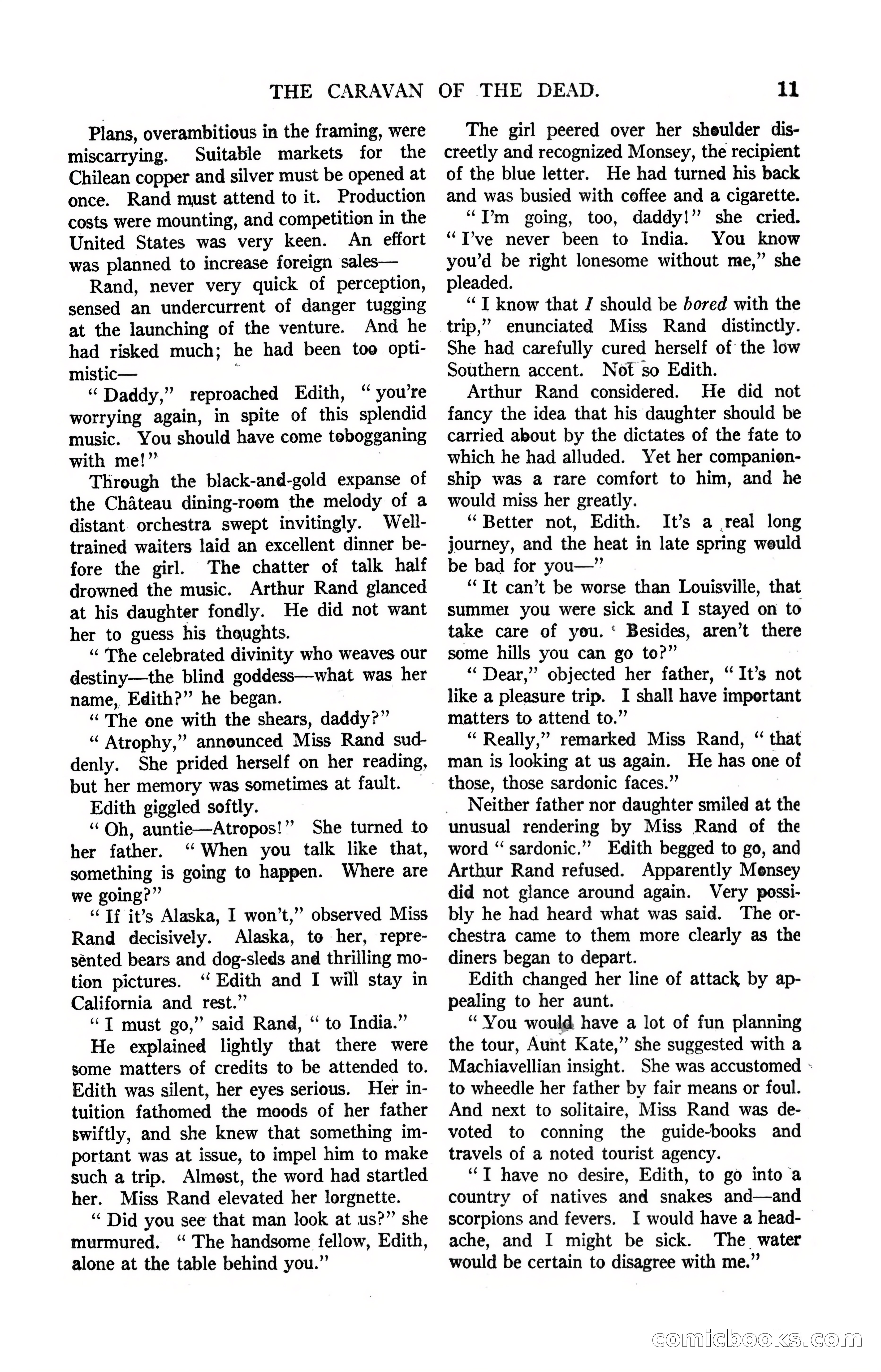
A restored page from Pulp Fiction, 1920. Page through the whole issue in the reader above.
📄 Transcribed text from this page (OCR, searchable)
Machine-transcribed from the original scan — historical spelling and the odd misread are preserved.
THE CARAVAN OF THE DEAD. Plans, overambitious in the framing, were miscarrying. Suitable markets for the Chilean copper and silver must be opened at once. Rand must attend to it. Production costs were mounting, and competition in the United States was very keen. An effort was planned to increase foreign sales— Rand, never very quick of perception, sensed an undercurrent of danger tugging at the launching of the venture. And he had risked much; he had been too opti- mistic— “ Daddy,” reproached Edith, “ you’re worrying again, in spite of this splendid music. You should have come tobogganing with me!” Through the black-and-gold expanse of the Chateau dining-room the melody of a distant. orchestra swept invitingly. Well- trained waiters laid an excellent dinner be- fore the girl. The chatter of talk half drowned the music. Arthur Rand glanced at his daughter fondly. He did not want her to guess his thoughts. “ The celebrated divinity who weaves our destiny—the blind goddess—what was her name,. Edith?” he began. | ‘The one with the shears, daddy?” “ Atrophy,” announced Miss Rand sud- denly. She prided herself on her reading, but her memory was sometimes at fault. — Edith giggled softly. “Oh, auntie—Atropos!” She turned to her father. “When you talk like that, something is going to happen. Where are we going?” “Tf it’s Alaska, I won’t,” observed Miss Rand decisively. Alaska, te her, repre- sented bears and dog-sleds and thrilling mo- tion pictures. “Edith and I will stay in California and rest.” “TI must go,” said Rand, “ to India.” He explained lightly that there were some matters of credits to be attended to. Edith was silent, her eyes serious. Her in- tuition fathomed the moods of her father swiftly, and she knew that something im- portant was at issue, to impel him to make such a trip. Almost, the word had startled her. Miss Rand elevated her lorgnette. “ Did you see that man look at us?” she murmured. ‘“ The handsome fellow, Edith, alone at the table behind you.” 11 The girl peered over her shoulder dis- creetly and recognized Monsey, the recipient of the blue letter. He had turned his back and was busied with coffee and a cigarette. “T’m going, too, daddy!” she cried. “T’ve never been to India. You know you’d be right lonesome without me,” she pleaded. ‘“‘T know that J should be bored with the trip,” enunciated Miss Rand distinctly. She had carefully cured herself of the low Southern accent. Not so Edith. Arthur Rand considered. He did not fancy the idea that his daughter should be carried about by the dictates of the fate to which he had alluded. Yet her companien- ship was a rare comfort to him, and he would miss her greatly. “ Better not, Edith. It’s a real long journey, and the heat in late spring weuld be bad for you—”’ “Tt can’t be worse than Louisville, that summer you were sick and I stayed on to take care of you. ‘ Besides, aren’t there some hills you can go to?” “Dear,” objected her father, “ It’s not like a pleasure trip. I shall have important matters to attend to.” “ Really,” remarked Miss Rand, “ that man is looking at us again. He has one of those, those sardonic faces.” Neither father nor daughter smiled at the unusual rendering by Miss Rand of the word “sardonic.” Edith begged to go, and Arthur Rand refused. Apparently Mensey did not glance around again. Very possi- bly he had heard what was said. The or- chestra came to them more clearly as the diners began to depart. Edith changed her line of attack by ap- pealing to her aunt. “You would have a lot of fun planning the tour, Aunt Kate,” she suggested with a Machiavellian insight. She was accustomed - to wheedle her father by fair means or foul. And next to solitaire, Miss Rand was de- voted to conning the guide-books and travels of a noted tourist agency. ‘“‘T have no desire, Edith, to go into a country of natives and snakes and—and scorpions and fevers. I would have a head- ache, and I might be sick. The. water would be certain to disagree with me.” cComiclbooks.com